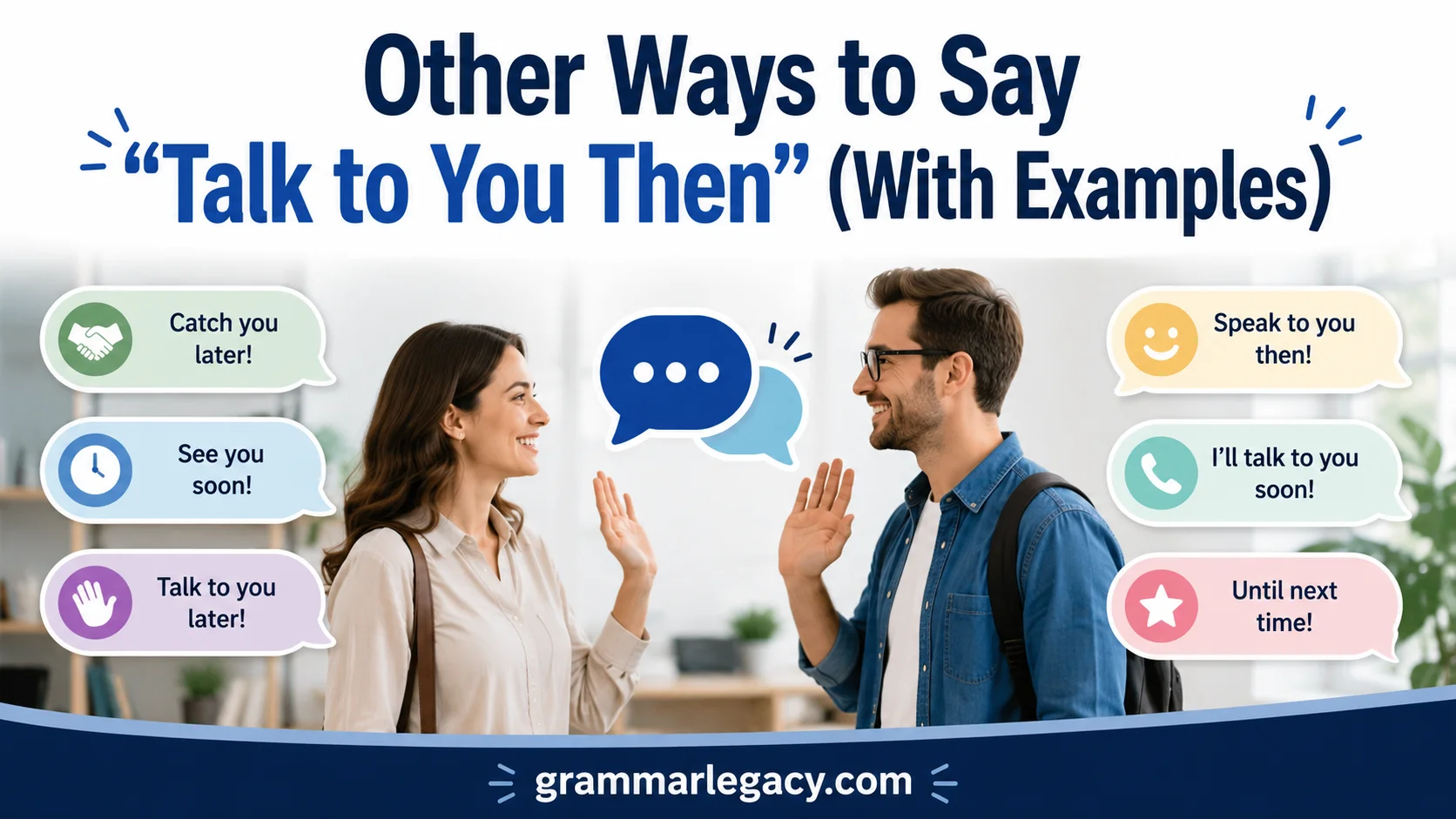

Other Ways to Say “Talk to You Then” (With Examples) can help your conversations sound more professional, friendly, and less repetitive in daily communication. The phrase talk to you then is a common English phrase people use to end a conversation before a future chat or meeting. In my experience, using different alternatives like talk soon, speak to you then, or talk again soon helps create a more natural and meaningful tone. These expressions improve communication, especially in emails, friendly chats, and professional contexts where the right wording matters a lot.
In today’s fast-paced world, people want messages that feel warm, polite, and easy to understand. During daily chats or professional emails, repeating the same phrase can sound stale and impersonal. I often suggest adding creative variations and casual phrases to make conversations more engaging and memorable. Whether you are closing a call with a client, sending a follow-up email, or ending virtual calls, choosing the right phrase improves professionalism, clarity, and respect. Small wording changes can leave a lasting impression and make your tone feel more refined and courteous.
Did You Know About “Talk to You Then”?
The phrase “talk to you then” is commonly used when ending a conversation while referring to a future time. It creates a sense of continuation and keeps communication open. Many English speakers use it in emails, phone calls, text messages, and even professional meetings.
Using different alternatives for “talk to you then” can make your tone sound more confident, warm, polite, or professional. Small wording changes often create a stronger emotional connection in conversations.
What Does “Talk to You Then” Mean?
The expression “talk to you then” means you expect to continue the conversation at a later or scheduled time. It is often used when confirming future communication after a meeting, appointment, or casual chat.
This phrase usually carries a friendly and positive tone. Depending on the context, it can sound professional, casual, romantic, or supportive.
Professional or Political Way to Say “Talk to You Then”
In professional settings, people often prefer polished alternatives to “talk to you then.” These phrases sound respectful, diplomatic, and workplace-friendly.
Some professional alternatives include:
- I look forward to speaking with you
- We’ll connect then
- I’ll follow up at that time
- I appreciate your time and will speak with you soon
- Let’s reconvene then
- I’ll touch base with you later
- We’ll discuss this further at that time
These phrases are ideal for business emails, meetings, interviews, and formal discussions.
List of 30 Synonyms for “Talk to You Then”
- Speak with you later
- Catch up with you later
- Talk soon
- Speak soon
- See you then
- Chat with you later
- Catch you later
- We’ll talk later
- Until then
- Talk again soon
- Looking forward to our chat
- I’ll be in touch
- Let’s reconnect then
- We’ll connect later
- Keep in touch
- Hear from you soon
- Until we speak again
- Let’s talk soon
- I’ll call you then
- We’ll catch up soon
- Talk to you soon
- I’ll reach out later
- Let’s continue this later
- We’ll discuss it then
- See you later
- I’ll check in later
- Let’s stay connected
- We’ll speak again soon
- Looking forward to speaking again
- Until next time
1. Speak with You Later
Definition: A polite and versatile way to end a conversation while planning future communication.
Meanings: It suggests that another conversation will happen later.
Example: “I’m heading into a meeting now. Speak with you later!”
Detailed Explanation: This phrase works well in both formal and casual conversations. It sounds polite without being overly serious. Many professionals use it in workplace emails or calls because it feels respectful and friendly at the same time. It also keeps the conversation open-ended in a positive way.
Tone: Professional and friendly
Best use: Business calls, emails, and casual chats
2. Catch Up with You Later
Definition: A casual phrase used when planning to talk again after some time.
Meanings: It implies reconnecting and sharing updates later.
Example: “I’m busy right now, but I’ll catch up with you later.”
Detailed Explanation: This expression is very common among friends and coworkers. It often suggests a more relaxed and meaningful conversation in the future. The phrase carries warmth and familiarity, making it excellent for informal relationships and social interactions.
Tone: Casual and warm
Best use: Friends, coworkers, and family conversations
3. Talk Soon
Definition: A short and friendly phrase promising future communication.
Meanings: It indicates that another conversation will happen in the near future.
Example: “Thanks for calling. Talk soon!”
Detailed Explanation: This is one of the most natural alternatives to “talk to you then.” It feels simple, modern, and conversational. Because it is brief, it works perfectly in text messages, emails, and quick conversations.
Tone: Friendly and casual
Best use: Texting and informal communication
4. Speak Soon
Definition: A polite expression used before ending a conversation.
Meanings: It expresses the intention to communicate again shortly.
Example: “Take care and speak soon.”
Detailed Explanation: This phrase sounds slightly more polished than “talk soon.” It is commonly used in professional emails and polite conversations. The wording feels respectful while still remaining warm and approachable.
Tone: Professional and polite
Best use: Emails and formal conversations
5. See You Then
Definition: A phrase confirming a future meeting or conversation.
Meanings: It means you expect to meet or speak at the agreed time.
Example: “Our meeting is at 3 PM tomorrow. See you then!”
Detailed Explanation: This phrase is extremely common when confirming plans. It creates clarity and reassurance in conversations. People often use it for appointments, meetings, events, and friendly gatherings.
Tone: Friendly and confident
Best use: Appointments and scheduled meetings
6. Chat with You Later
Definition: An informal phrase used for friendly future conversations.
Meanings: It suggests a relaxed conversation later on.
Example: “I need to leave now, but I’ll chat with you later.”
Detailed Explanation: This phrase feels personal and easygoing. It is especially popular in texting and social media conversations. The word “chat” makes the communication sound more relaxed and enjoyable.
Tone: Casual and relaxed
Best use: Friends and online chats
7. Catch You Later
Definition: A very casual goodbye phrase.
Meanings: It means you expect to see or talk again later.
Example: “I’m heading out now. Catch you later!”
Detailed Explanation: This expression is widely used among younger speakers and close friends. It sounds playful, informal, and upbeat. Because of its casual nature, it is not suitable for professional settings.
Tone: Very casual
Best use: Close friends and informal situations
8. We’ll Talk Later
Definition: A simple phrase indicating future communication.
Meanings: It suggests continuing the discussion another time.
Example: “I’m busy at the moment. We’ll talk later.”
Detailed Explanation: This phrase can sound neutral, friendly, or serious depending on the context. It is useful when postponing a discussion. In personal relationships, tone of voice often changes its meaning significantly.
Tone: Neutral
Best use: Everyday conversations
9. Until Then
Definition: A short phrase used while waiting for a future meeting or conversation.
Meanings: It refers to the time before the next interaction.
Example: “Take care until then.”
Detailed Explanation: This phrase sounds thoughtful and slightly elegant. It creates anticipation for future communication while sounding warm and sincere. It is often used in letters, emails, and heartfelt messages.
Tone: Warm and thoughtful
Best use: Friendly and emotional conversations
10. Talk Again Soon
Definition: A phrase expressing the desire for another conversation soon.
Meanings: It indicates ongoing communication.
Example: “I enjoyed our conversation. Talk again soon!”
Detailed Explanation: This phrase feels encouraging and positive. It works especially well when ending enjoyable discussions. It also strengthens relationships by showing interest in future interaction.
Tone: Positive and friendly
Best use: Friends and colleagues
11. Looking Forward to Our Chat
Definition: A phrase showing excitement for a future conversation.
Meanings: It expresses anticipation and interest.
Example: “I’m looking forward to our chat tomorrow.”
Detailed Explanation: This phrase sounds enthusiastic and respectful. It is frequently used in professional communication because it shows eagerness without sounding overly emotional. It also creates a positive impression.
Tone: Professional and warm
Best use: Business meetings and planned calls
12. I’ll Be in Touch
Definition: A professional phrase meaning future contact will happen.
Meanings: It promises follow-up communication.
Example: “Thank you for your time. I’ll be in touch.”
Detailed Explanation: This phrase is highly professional and commonly used in workplaces. It sounds confident and responsible. Recruiters, managers, and clients often use it after interviews or meetings.
Tone: Professional
Best use: Business and corporate communication
13. Let’s Reconnect Then
Definition: A phrase suggesting meeting or talking again later.
Meanings: It emphasizes renewing communication.
Example: “We’re both busy this week. Let’s reconnect then.”
Detailed Explanation: This phrase feels modern and professional. It suggests maintaining a relationship or discussion over time. It is common in networking and business conversations.
Tone: Professional and modern
Best use: Networking and workplace communication
14. We’ll Connect Later
Definition: A professional way to plan future communication.
Meanings: It means you will communicate again later.
Example: “I’ll send the details now, and we’ll connect later.”
Detailed Explanation: This phrase is polished and business-friendly. It sounds collaborative and respectful while remaining conversational. It is often used in corporate settings.
Tone: Professional
Best use: Business discussions
15. Keep in Touch
Definition: A phrase encouraging ongoing communication.
Meanings: It suggests staying connected over time.
Example: “It was great meeting you. Keep in touch!”
Detailed Explanation: This expression is warm and relationship-focused. It often appears when people part ways but want to maintain communication. It can be personal or professional depending on context.
Tone: Warm and friendly
Best use: Networking and friendships
Also Read This: 30 Other Ways to Say “Talk to You Soon” (With Examples)
16. Hear from You Soon
Definition: A phrase expressing hope for future communication.
Meanings: It indicates expectation of a reply or conversation.
Example: “I hope to hear from you soon.”
Detailed Explanation: This phrase is common in professional emails and polite requests. It sounds respectful and optimistic. People often use it when waiting for updates or responses.
Tone: Polite and professional
Best use: Emails and formal messages
17. Until We Speak Again
Definition: A thoughtful phrase used before future communication.
Meanings: It refers to the time before another conversation happens.
Example: “Take care until we speak again.”
Detailed Explanation: This phrase sounds emotional and elegant. It carries a deeper sense of connection and is often used in meaningful conversations. It may also sound poetic or spiritual.
Tone: Emotional and heartfelt
Best use: Personal and sentimental conversations
18. Let’s Talk Soon
Definition: A phrase encouraging another conversation shortly.
Meanings: It expresses interest in staying connected.
Example: “This was fun. Let’s talk soon!”
Detailed Explanation: This expression feels inviting and friendly. It shows genuine interest in continuing communication. It is ideal for strengthening social and emotional bonds.
Tone: Friendly and warm
Best use: Friends and loved ones
19. I’ll Call You Then
Definition: A direct phrase confirming a future phone call.
Meanings: It specifies how communication will happen later.
Example: “I’ll call you then after work.”
Detailed Explanation: This phrase sounds clear and practical. It removes confusion by specifying that the future interaction will be through a phone call. It works well in personal and professional contexts.
Tone: Direct and practical
Best use: Phone conversations and scheduling
20. We’ll Catch Up Soon
Definition: A phrase expressing future reconnection.
Meanings: It suggests sharing updates and talking later.
Example: “It’s been too long. We’ll catch up soon.”
Detailed Explanation: This phrase feels caring and personal. It often implies that both people value the relationship and want to reconnect more meaningfully in the future.
Tone: Warm and personal
Best use: Friends and family
21. Talk to You Soon
Definition: A very common phrase for future communication.
Meanings: It means another conversation will happen shortly.
Example: “Have a good day. Talk to you soon!”
Detailed Explanation: This phrase is one of the closest alternatives to “talk to you then.” It is flexible, natural, and widely accepted in almost every situation.
Tone: Neutral and friendly
Best use: Daily communication
22. I’ll Reach Out Later
Definition: A professional phrase for future contact.
Meanings: It means you will contact someone later.
Example: “I’ll reach out later with more details.”
Detailed Explanation: This phrase sounds proactive and professional. It is especially common in workplaces and business environments where follow-up communication is important.
Tone: Professional
Best use: Corporate communication
23. Let’s Continue This Later
Definition: A phrase used when postponing a discussion.
Meanings: It means the conversation is not finished yet.
Example: “This is interesting. Let’s continue this later.”
Detailed Explanation: This phrase keeps the discussion open and ongoing. It is useful during long conversations or debates where more time is needed later.
Tone: Neutral and conversational
Best use: Discussions and brainstorming
24. We’ll Discuss It Then
Definition: A phrase referring to a future discussion.
Meanings: It confirms the topic will be addressed later.
Example: “We’ll discuss it then during the meeting.”
Detailed Explanation: This phrase sounds organized and professional. It is commonly used in offices, interviews, and formal planning conversations.
Tone: Formal and professional
Best use: Meetings and work discussions
25. See You Later
Definition: A casual goodbye phrase.
Meanings: It means you expect to meet again later.
Example: “Bye for now. See you later!”
Detailed Explanation: This is one of the most widely used casual expressions in English. It feels friendly, simple, and natural in everyday life.
Tone: Casual and cheerful
Best use: Daily conversations
26. I’ll Check In Later
Definition: A phrase promising future follow-up.
Meanings: It means you will contact someone to ask for updates later.
Example: “I’ll check in later to see how things are going.”
Detailed Explanation: This phrase sounds caring and responsible. It is commonly used by managers, friends, parents, and supportive people who want to stay informed.
Tone: Supportive and professional
Best use: Follow-ups and support conversations
27. Let’s Stay Connected
Definition: A phrase encouraging continued communication.
Meanings: It emphasizes maintaining the relationship.
Example: “It was wonderful meeting you. Let’s stay connected.”
Detailed Explanation: This phrase is highly popular in networking and social media culture. It sounds modern, friendly, and relationship-oriented.
Tone: Warm and professional
Best use: Networking and friendships
28. We’ll Speak Again Soon
Definition: A polite phrase suggesting future communication.
Meanings: It indicates another conversation will happen soon.
Example: “Thank you for your help. We’ll speak again soon.”
Detailed Explanation: This expression sounds refined and respectful. It is often used in customer service, professional emails, and formal conversations.
Tone: Professional and polite
Best use: Formal communication
29. Looking Forward to Speaking Again
Definition: A phrase expressing excitement about future conversations.
Meanings: It shows positive anticipation.
Example: “I enjoyed our discussion and look forward to speaking again.”
Detailed Explanation: This phrase sounds sincere and appreciative. It is commonly used after interviews, networking events, and meaningful discussions.
Tone: Professional and appreciative
Best use: Business and networking
30. Until Next Time
Definition: A warm closing phrase for future interaction.
Meanings: It refers to the next meeting or conversation.
Example: “Take care until next time.”
Detailed Explanation: This phrase sounds thoughtful and memorable. It is often used in speeches, videos, podcasts, and emotional conversations because it leaves a positive final impression.
Tone: Warm and reflective
Best use: Friendly farewells and emotional conversations
FAQs:
1. What does “talk to you then” mean?
It is a common English phrase used to end a conversation politely when a future chat or meeting is planned.
2. Is “talk to you then” formal or informal?
It is mostly informal, but it can be used in professional contexts if the situation is casual.
3. Why should I use other phrases instead of it?
Using different alternatives helps avoid repetition, improves communication, and sounds more confident and professional.
4. What are some simple alternatives?
You can use talk soon, speak to you then, or talk again soon in everyday chats.
5. Is “talk to you soon” different from “talk to you then”?
Yes, talk to you soon is more general, while talk to you then is used when a time is already planned.
Conclusion:
Using other ways to say “talk to you then” helps make your speech and writing more varied, polished, and effective in daily life. Instead of relying on the same common English phrase, you can choose creative variations that fit formal, informal, or professional contexts. This improves communication, adds a more courteous tone, and helps your message feel more natural and confident in every situation, whether in emails, meetings, or friendly chats.