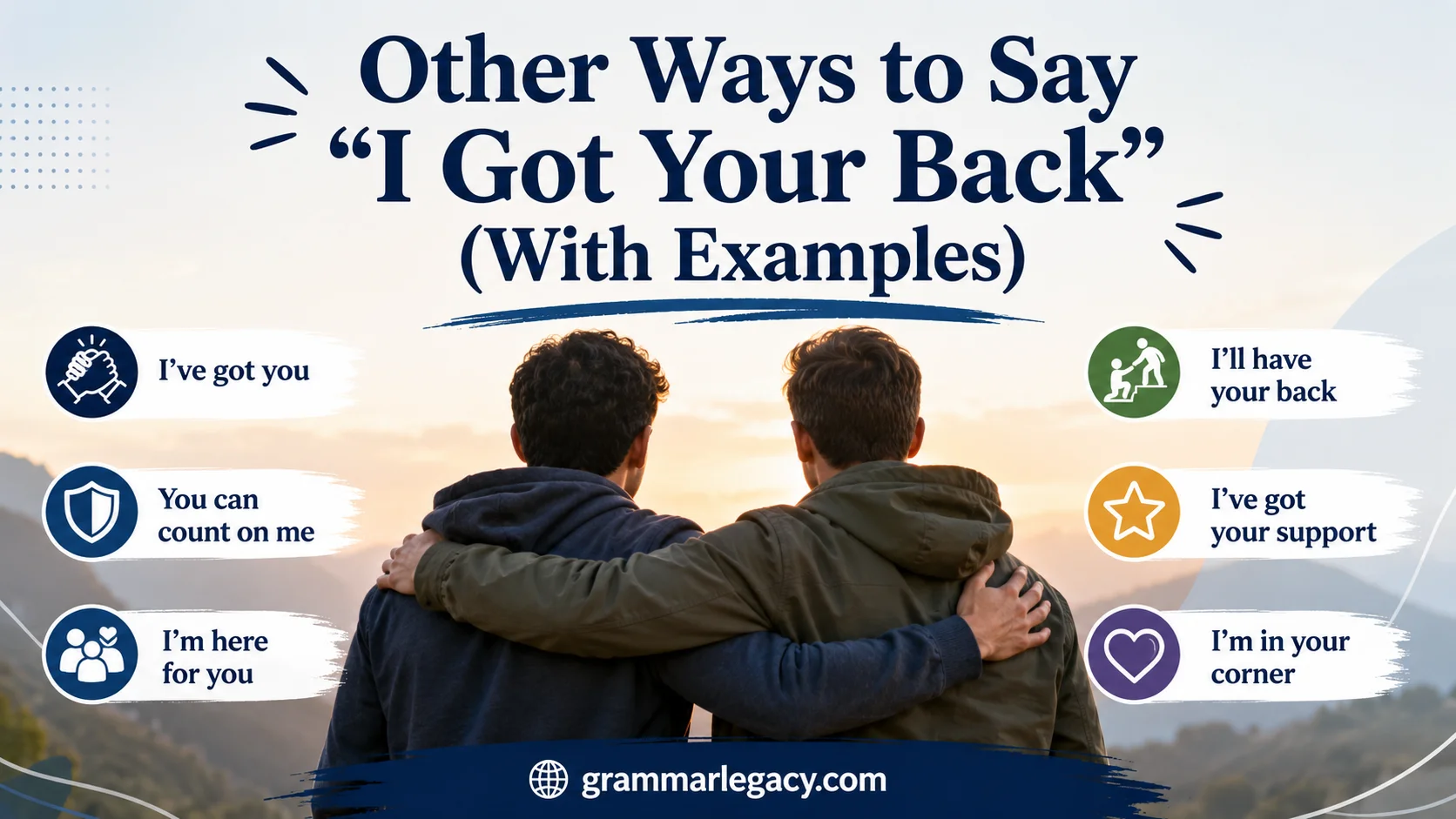

When exploring Other Ways to Say “I Got Your Back”, it is important to understand how this popular phrase expresses support, loyalty, and trust. In everyday conversations, people use it to reassure friends, coworkers, or family members that they are not alone. The phrase reflects a strong sense of readiness to help and emotional connection. Learning alternative expressions can improve your communication skills and help you sound more natural, confident, and effective in both personal and professional situations.
Using different expressions instead of “I Got Your Back” allows you to match the right tone and context. Whether you are writing an email, sending a message, participating in a meeting, or having a friendly chat, the right wording can make your support feel more genuine. These alternatives help strengthen relationships, improve communication, and demonstrate dependability. By understanding proper usage and real-life examples, you can choose phrases that sound professional, friendly, and appropriate for a variety of situations.
Did You Know About “I Got Your Back”?
The phrase “I got your back” originated from military slang, where soldiers relied on each other for protection and survival during combat. Over time, it evolved into a widely used expression of loyalty and emotional support in everyday language.
Today, it is commonly used in friendships, workplaces, relationships, and even online conversations. While it is informal and powerful, people often choose more polished or situation-specific alternatives in professional or formal settings.
What Does “I Got Your Back” Mean?
The phrase “I got your back” means that you are offering support, protection, encouragement, or help to someone. It assures the other person that you will stand with them during challenges or decisions.
It can express:
- Emotional support
- Loyalty and trust
- Protection or defense
- Encouragement
- Teamwork and unity
- Reliability in difficult situations
The meaning may shift slightly depending on tone—casual, professional, romantic, or motivational.
Professional or Formal Ways to Say “I Got Your Back”
In workplace or formal communication, it is better to use respectful and polished alternatives such as:
- You can rely on my full support
- I will stand by your decision
- You have my complete backing
- I am here to assist you whenever needed
- I will support you throughout this process
These expressions maintain professionalism while still conveying trust and teamwork.
Synonyms “I Got Your Back”
- I’m Here for You
- You Can Count on Me
- I’ll Stand by You
- I’ve Got You Covered
- I’ll Support You All the Way
- I’m With You No Matter What
- You’re Not Alone
- I’ll Back You Up
- I’ll Be There for You
- You Have My Full Support
- I’ll Look Out for You
- I’m on Your Side
- I’ll Help You Through This
- I’ll Take Care of It With You
- I’ve Got Your Six
- I’ll Always Be There for You
- I Will Stand With You
- I’m Right Behind You
- I’ll Defend You
- I’ll Support You Completely
- You Can Rely on Me
- I Won’t Let You Down
- I’ll Be Your Support System
- I’m Here to Help
- I’ll Stand Beside You
- I’ll Be Your Backup
- I’ll Handle This With You
- I’ve Got Your Support Covered
- I’ll Be in Your Corner
- I’ll Never Leave Your Side
1. I’m Here for You
Definition: A simple and heartfelt expression showing emotional availability. It assures someone of your presence and support.
Meanings: It means you are emotionally and physically available to support someone.
Example: No matter what happens, I’m here for you.
Detailed Explanation: This phrase is one of the most comforting expressions in English. It is often used in emotional conversations where someone needs reassurance. It feels warm, human, and deeply supportive. It does not sound formal, making it ideal for personal relationships. It creates a sense of safety and emotional connection.
Tone: Warm, emotional, caring
Best use: Friends, family, romantic relationships, emotional support
2. You Can Count on Me
Definition: A confident phrase that shows reliability and trustworthiness.
Meanings: It means the other person can depend on you without hesitation.
Example: You can count on me to help you finish this project.
Detailed Explanation: This expression is powerful in both personal and professional contexts. It communicates responsibility and dependability. People often use it to build trust in relationships or teamwork. It reassures others that you will not fail them. The phrase strengthens confidence between individuals.
Tone: Reliable, professional, trustworthy
Best use: Workplace, teamwork, commitments
3. I’ll Stand by You
Definition: A supportive phrase expressing loyalty during challenges.
Meanings: It means you will remain supportive no matter what happens.
Example: I’ll stand by you even if things get difficult.
Detailed Explanation: This phrase is emotionally strong and often used in both friendship and romantic relationships. It expresses long-term loyalty and emotional strength. It reassures someone that your support is constant. The phrase is also commonly used in difficult situations where someone feels alone.
Tone: Loyal, emotional, supportive
Best use: Relationships, emotional support, crisis situations
4. I’ve Got You Covered
Definition: A casual phrase meaning you will handle or support everything needed.
Meanings: It means you will take responsibility or provide help.
Example: Don’t worry about the details—I’ve got you covered.
Detailed Explanation: This phrase is commonly used in casual and workplace conversations. It shows confidence and readiness to help. It can also mean that you are handling a task for someone. The expression feels reassuring and practical. It helps reduce stress for the other person.
Tone: Casual, confident, helpful
Best use: Workplace tasks, casual help, teamwork
5. I’ll Support You All the Way
Definition: A strong phrase showing continuous and full support.
Meanings: It means you will support someone from start to finish.
Example: I’ll support you all the way in your journey.
Detailed Explanation: This expression shows long-term commitment and encouragement. It is often used in motivational or emotional contexts. It gives people confidence to pursue goals or face challenges. The phrase feels empowering and deeply supportive. It is ideal for inspiring others.
Tone: Motivational, encouraging, loyal
Best use: Personal goals, encouragement, mentorship
6. I’m With You No Matter What
Definition: A deeply loyal phrase expressing unconditional support.
Meanings: It means your support will not change under any condition.
Example: I’m with you no matter what decision you make.
Detailed Explanation: This phrase is emotionally intense and very supportive. It is often used in close relationships and serious situations. It creates a sense of unity and emotional safety. The phrase helps strengthen trust and connection between people. It is powerful in both romantic and friendship contexts.
Tone: Emotional, loyal, strong
Best use: Close relationships, emotional reassurance
7. You’re Not Alone
Definition: A comforting phrase used to reduce emotional isolation.
Meanings: It means someone is standing with you during difficulty.
Example: You’re not alone—I’ll help you through this.
Detailed Explanation: This phrase is widely used in emotional and mental support situations. It provides comfort during stress, sadness, or uncertainty. It is simple but very powerful in emotional healing. The phrase builds connection and reduces feelings of loneliness.
Tone: Comforting, emotional, supportive
Best use: Emotional support, crisis conversations, friendships
8. I’ll Back You Up
Definition: A supportive phrase meaning you will defend or support someone.
Meanings: It means you will support someone’s actions or decisions.
Example: If there’s a problem, I’ll back you up.
Detailed Explanation: This phrase is commonly used in teamwork and group situations. It shows solidarity and protection. It can also mean defending someone in a disagreement. The expression builds confidence and trust in relationships. It is often used in both casual and professional environments.
Tone: Supportive, strong, protective
Best use: Workplace, teamwork, disagreements
9. I’ll Be There for You
Definition: A classic phrase expressing emotional and physical presence.
Meanings: It means you will be available whenever needed.
Example: I’ll be there for you whenever you need help.
Detailed Explanation: This phrase is one of the most widely used expressions of support. It is simple, heartfelt, and universal. It works in almost every type of relationship. It reassures people that they can depend on you emotionally. It is often used in friendships and romantic relationships.
Tone: Warm, supportive, emotional
Best use: Friendship, family, relationships
10. You Have My Full Support
Definition: A formal phrase expressing complete backing and approval.
Meanings: It means you fully agree and support someone.
Example: You have my full support in this decision.
Detailed Explanation: This phrase is commonly used in professional or official settings. It shows strong agreement and trust. It can also be used in leadership communication. The phrase sounds respectful and authoritative. It is ideal when making decisions or approvals.
Tone: Formal, professional, supportive
Best use: Business, leadership, official communication
11. I’ll Look Out for You
Definition: A caring phrase meaning you will protect or watch over someone.
Meanings: It means you will ensure someone’s safety or well-being.
Example: Don’t worry—I’ll look out for you.
Detailed Explanation: This phrase is protective and caring in tone. It is often used between friends, siblings, or partners. It shows emotional responsibility and concern. It helps create trust and comfort. It is especially meaningful in uncertain situations.
Tone: Protective, caring, warm
Best use: Close relationships, emotional care
12. I’m on Your Side
Definition: A phrase showing agreement and support in a situation.
Meanings: It means you support someone’s opinion or decision.
Example: I’m on your side in this discussion.
Detailed Explanation: This expression is often used in disagreements or conflicts. It shows loyalty and alignment. It reassures someone that they are not alone in their opinion. It is useful in both personal and professional debates.
Tone: Supportive, neutral, loyal
Best use: Discussions, conflicts, teamwork
13. I’ll Help You Through This
Definition: A supportive phrase used during difficult times.
Meanings: It means you will assist someone emotionally or practically.
Example: I’ll help you through this tough situation.
Detailed Explanation: This phrase is often used in emotional or stressful situations. It provides comfort and reassurance. It shows commitment to supporting someone during hardship. The expression feels sincere and caring. It is commonly used in friendships and relationships.
Tone: Emotional, supportive, caring
Best use: Crisis support, emotional conversations
14. I’ve Got Your Six
Definition: A military-origin phrase meaning protection from behind.
Meanings: It means you are watching out for someone completely.
Example: Don’t worry—I’ve got your six.
Detailed Explanation: This phrase is informal but powerful. It is widely used in action, military, and gaming culture. It expresses complete protection and loyalty. It is best used in casual or symbolic contexts. It adds a strong sense of trust and teamwork.
Tone: Casual, strong, protective
Best use: Friends, gaming, informal teamwork
15. I’ll Always Be There for You
Definition: A deeply emotional phrase expressing lifelong support.
Meanings: It means your support is permanent and unconditional.
Example: No matter what happens, I’ll always be there for you.
Detailed Explanation: This phrase is very strong emotionally and often used in close relationships. It expresses commitment and loyalty. It reassures someone that they are never alone. The phrase is common in romantic and family bonds. It builds deep emotional trust.
Tone: Emotional, loyal, heartfelt
Best use: Romantic relationships, family, close friends
Read More: 30 Other Ways to Say “If Time Permits” in Conversations (With Examples)
16. I Will Stand With You
Definition: A formal and supportive phrase showing unity.
Meanings: It means you will support someone’s position or struggle.
Example: I will stand with you in this matter.
Detailed Explanation: This phrase is often used in formal or serious contexts. It shows solidarity and respect. It can be used in social, political, or workplace situations. It communicates strong moral support.
Tone: Formal, strong, respectful
Best use: Professional, social causes, serious discussions
17. I’m Right Behind You
Definition: A phrase meaning close support and readiness to help.
Meanings: It means you are ready to assist immediately.
Example: Go ahead—I’m right behind you.
Detailed Explanation: This expression can be literal or symbolic. It shows immediate support and presence. It is often used in teamwork or action situations. The phrase creates a sense of security and cooperation.
Tone: Supportive, active, reassuring
Best use: Teamwork, active tasks, encouragement
18. I’ll Defend You
Definition: A strong phrase showing protection and loyalty.
Meanings: It means you will protect someone from criticism or harm.
Example: I’ll defend you if anyone questions your decision.
Detailed Explanation: This phrase is powerful and protective. It is often used when someone is being judged or criticized. It shows loyalty and courage. It is best used in situations where support is needed publicly or privately.
Tone: Strong, protective, loyal
Best use: Conflicts, workplace defense, friendships
19. I’ll Support You Completely
Definition: A phrase showing full and unconditional backing.
Meanings: It means total emotional and practical support.
Example: I’ll support you completely in your journey.
Detailed Explanation: This phrase emphasizes total commitment. It is often used in motivational or serious contexts. It builds confidence and trust in relationships. The wording is strong and reassuring.
Tone: Supportive, confident, encouraging
Best use: Personal goals, mentorship, leadership
20. You Can Rely on Me
Definition: A trustworthy phrase showing dependability.
Meanings: It means you are reliable and consistent.
Example: You can rely on me for help anytime.
Detailed Explanation: This phrase is widely used in professional and personal contexts. It builds trust and confidence. It assures the other person that you are dependable. It is a strong alternative to informal expressions of support.
Tone: Reliable, professional, trustworthy
Best use: Workplace, commitments, relationships
21. I Won’t Let You Down
Definition: A promise of reliability and support.
Meanings: It means you will not fail or disappoint someone.
Example: I won’t let you down—I promise.
Detailed Explanation: This phrase expresses accountability and commitment. It is often used when making promises or assurances. It builds emotional and professional trust. It is powerful in both personal and work settings.
Tone: Serious, committed, trustworthy
Best use: Promises, commitments, teamwork
22. I’ll Be Your Support System
Definition: A phrase showing ongoing emotional and practical support.
Meanings: It means you will consistently help and support someone.
Example: I’ll be your support system during this time.
Detailed Explanation: This phrase feels modern and emotionally strong. It suggests long-term involvement and care. It is often used in relationships and emotional support contexts. It provides deep reassurance and comfort.
Tone: Emotional, supportive, caring
Best use: Relationships, emotional healing, friendships
23. I’m Here to Help
Definition: A simple and professional expression of assistance.
Meanings: It means you are available to provide help.
Example: I’m here to help you with anything you need.
Detailed Explanation: This phrase is widely used in professional communication. It sounds polite, clear, and approachable. It is commonly used in customer service and workplace environments. It encourages open communication and trust.
Tone: Professional, helpful, polite
Best use: Customer service, workplace, support roles
24. I’ll Stand Beside You
Definition: A phrase expressing equality and shared support.
Meanings: It means you will support someone as an equal partner.
Example: I’ll stand beside you through this challenge.
Detailed Explanation: This phrase feels balanced and respectful. It is often used in emotional or professional partnerships. It shows solidarity and teamwork. It is especially meaningful in shared struggles or goals.
Tone: Respectful, supportive, equal
Best use: Partnerships, teamwork, relationships
25. I’ll Be Your Backup
Definition: A casual phrase meaning you will assist if needed.
Meanings: It means you are ready to support when required.
Example: Don’t worry—I’ll be your backup.
Detailed Explanation: This phrase is often used in informal or team-based situations. It shows readiness and support. It is common in work environments and casual friendships. It gives reassurance without pressure.
Tone: Casual, supportive, ready
Best use: Teamwork, casual help, group tasks
26. I’ll Handle This With You
Definition: A collaborative phrase showing shared responsibility.
Meanings: It means you will work together to solve something.
Example: I’ll handle this with you step by step.
Detailed Explanation: This phrase shows teamwork and cooperation. It reduces stress by sharing responsibility. It is useful in problem-solving situations. It builds confidence and trust between people.
Tone: Collaborative, supportive, practical
Best use: Workplace, problem-solving, teamwork
27. I’ve Got Your Support Covered
Definition: A modern phrase showing complete backing.
Meanings: It means you will take care of all support needed.
Example: Don’t worry, I’ve got your support covered.
Detailed Explanation: This phrase sounds modern and confident. It is often used in informal or semi-professional contexts. It communicates assurance and reliability. It helps reduce anxiety in challenging situations.
Tone: Confident, casual, supportive
Best use: Teamwork, casual professional settings
28. I’ll Be in Your Corner
Definition: A motivational phrase meaning active support.
Meanings: It means you are actively supporting someone’s side.
Example: I’ll be in your corner during the competition.
Detailed Explanation: This phrase comes from boxing, where trainers stay in the fighter’s corner. It symbolizes strong emotional and moral support. It is often used in motivational and competitive contexts. It builds confidence and encouragement.
Tone: Motivational, supportive, energetic
Best use: Sports, competition, encouragement
29. I’ve Got Your Support Covered
Definition: A confident expression of complete assistance.
Meanings: It means you will ensure full support is provided.
Example: I’ve got your support covered for this project.
Detailed Explanation: This phrase is modern and informal but powerful. It shows readiness and confidence. It is often used in teamwork or collaborative environments. It helps reassure others that they are not alone.
Tone: Confident, supportive, casual
Best use: Workplace, teamwork, group projects
30. I’ll Never Leave Your Side
Definition: A deeply emotional phrase expressing lifelong loyalty.
Meanings: It means your support will remain constant forever.
Example: I’ll never leave your side, no matter what happens.
Detailed Explanation: This phrase is one of the strongest emotional expressions of support. It is often used in romantic or deeply personal relationships. It conveys unconditional loyalty and love. It creates strong emotional reassurance and bonding.
Tone: Romantic, emotional, loyal
Best use: Romantic relationships, deep emotional bonds
FAQs:
1. What does “I got your back” mean?
It means you are showing support, loyalty, and readiness to help someone when needed.
2. When can I use this phrase?
You can use it in friends, colleagues, and teams in both casual and friendly situations.
3. Is “I got your back” formal or informal?
It is mostly informal, but it can also be used in light professional settings depending on the tone.
4. Why should I learn other ways to say it?
Using alternative expressions improves fluency, makes your communication more natural, and avoids repetition.
5. Can it be used in emails or meetings?
Yes, but in formal emails or meetings, it is better to use more professional communication phrases.
Conclusion
Using other ways to say “I got your back” improves your communication skills, making your speech more fluent, clear, and natural. It also strengthens your ability to express support, loyalty, and readiness in different contexts, whether in casual chats or professional communication.