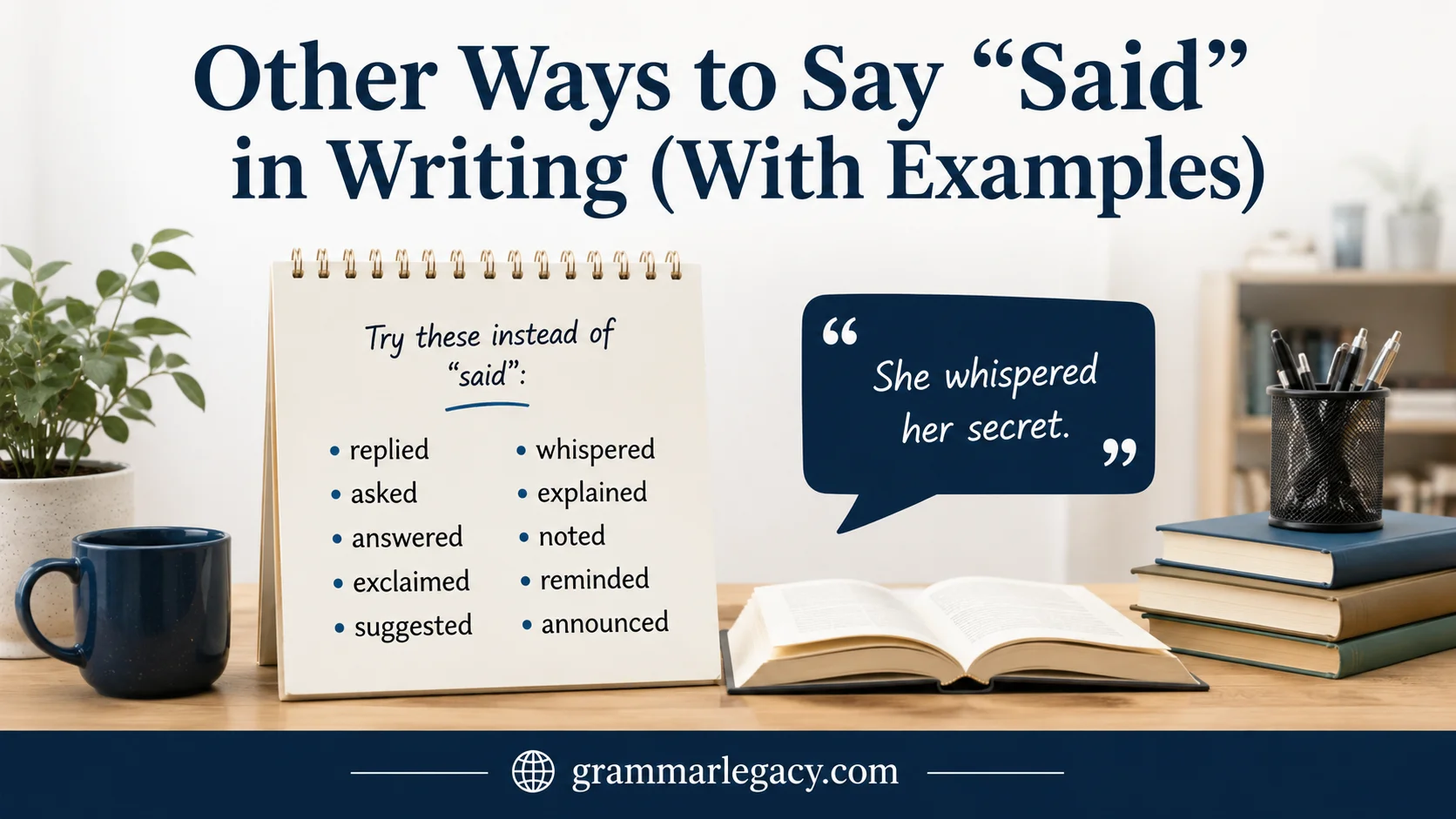

Other Ways to Say “Said” in Writing (With Examples) is a helpful guide for anyone who wants to improve dialogue and make conversations sound more engaging. While said is clear and commonly used, repeating it too often can make writing feel dull and predictable. Learning alternative dialogue tags allows writers to create smoother conversations, express emotions better, and keep readers interested from beginning to end.
Whether you write novels, short stories, or creative essays, using different ways to describe speech can add depth and personality to your characters. I have often noticed during editing that replacing a few repeated dialogue tags instantly improves the flow of a scene. This article shares useful alternatives to said, practical tips, and examples to help writers build stronger and more natural dialogue.
Did You Know About Other Ways to Say Said in Writing?
Many writers rely on said because it is simple, invisible, and safe. But when every line of dialogue uses the same verb, the writing can start to feel flat and repetitive. Using a variety of reporting verbs can improve pacing, strengthen character voice, and help readers feel the emotion behind the words. In fiction and nonfiction alike, the right speech verb can change the whole mood of a sentence.
What Does “Said” Mean in Writing?
In writing, said is a reporting verb used to show that someone spoke. It is one of the most common dialogue tags in English because it is clear, easy to read, and does not distract from the message. Writers use it to introduce speech, quote a statement, or identify who is speaking in a conversation.
Although said is perfectly correct, it is not always the best choice. Depending on the situation, you may want a word that sounds more formal, more emotional, more authoritative, or more expressive. That is where other words become useful.
Professional or Political Way to Say Said
In professional, academic, or political writing, it is often better to use more precise and polished alternatives to said. Words like stated, noted, declared, affirmed, explained, confirmed, and emphasized sound more formal and credible. These verbs are especially useful in speeches, press releases, reports, interviews, and official statements.
For example, a politician may declare a new policy, a spokesperson may state the facts, and a company representative may confirm the details. These choices create a serious, professional tone and help your writing feel more authoritative.
“Said” in Writing Synonyms
- Throughout the Years
- Over Time
- In the Course of Time
- As Time Went By
- In Later Years
- Across the Years
- With the Passing Years
- As the Years Passed
- Through the Years
- Year After Year
- From Year to Year
- In Recent Years
- Over a Span of Years
- In the Intervening Years
- In Due Course
- In the Fullness of Time
- As Decades Passed
- Down the Years
- In the Years That Followed
- In the Years Since
- During Those Years
- Through the Passage of Time
- All Through the Years
- As Life Moved On
- Over the Passage of Years
- In Successive Years
- From One Year to the Next
- In the Long Run
- As the Seasons Changed
- In the Years Gone By
1. Stated
Definition: Stated means to express something clearly and formally. It is a direct, polished alternative to said.
Meanings: To express facts, opinions, or information in a clear way.
Example: The manager stated that the deadline would not change.
Detailed Explanation: Stated works well when you want a sentence to sound official, calm, and precise. It is one of the best choices for professional writing, academic work, and news-style reporting. It does not carry strong emotion, which makes it ideal for factual statements. This word is clean, reliable, and easy to understand.
Tone: Formal, neutral, professional.
Best use: Reports, business writing, academic content, official statements.
2. Remarked
Definition: Remarked means to say something briefly, often as a comment. It suggests a light, conversational statement.
Meanings: To comment casually or thoughtfully.
Example: She remarked that the room felt unusually quiet.
Detailed Explanation: Remarked is useful when a speaker is making a quick observation or a thoughtful side comment. It feels natural in dialogue because it is not too stiff or too emotional. Writers often use it when they want to show a character is speaking in a calm, reflective way. It can also create a slightly polished tone.
Tone: Casual, thoughtful, mildly formal.
Best use: Dialogue, narration, observations, reflective writing.
3. Noted
Definition: Noted means to mention something as important or worthy of attention. It often sounds intelligent and restrained.
Meanings: To observe, mention, or point out.
Example: He noted that the weather had changed suddenly.
Detailed Explanation: Noted is especially useful in business, journalism, and formal writing. It suggests that the speaker is paying attention and making an important observation without sounding dramatic. This verb can give your sentence a calm and careful tone. It is a strong choice when the focus is on information rather than emotion.
Tone: Formal, observant, professional.
Best use: Articles, reports, meetings, analytical writing.
4. Explained
Definition: Explained means to make something clear by giving details. It shows that the speaker is helping others understand.
Meanings: To clarify, describe, or make understandable.
Example: The teacher explained the lesson in simple words.
Detailed Explanation: Explained is a very useful alternative when the speaker is not just talking but teaching, clarifying, or breaking down an idea. It works beautifully in educational writing, helpful guides, and serious conversations. This verb gives the writing a warm and informative feel. It is especially strong when the speaker is patient or thoughtful.
Tone: Clear, helpful, supportive.
Best use: Teaching, instructions, interviews, advice writing.
5. Replied
Definition: Replied means to answer someone’s words. It shows a direct response in conversation.
Meanings: To answer, respond, or come back with words.
Example: “I am ready,” he replied.
Detailed Explanation: Replied is one of the most natural alternatives to said in dialogue. It works when one person answers another person directly. The verb feels simple and balanced, so it does not overwhelm the sentence. It is useful in fiction, emails, and everyday conversation.
Tone: Neutral, conversational, natural.
Best use: Dialogue, letters, storytelling, everyday writing.
6. Responded
Definition: Responded means to answer or react to something said or done. It can show a verbal or emotional reaction.
Meanings: To reply, react, or answer thoughtfully.
Example: She responded with a calm smile.
Detailed Explanation: Responded is slightly broader than replied because it can describe both speech and reaction. It works well when you want to show that someone answered in a measured or thoughtful way. This word is useful in formal writing, interviews, and narrative scenes. It gives the sense of action without being too dramatic.
Tone: Neutral, calm, adaptable.
Best use: Formal dialogue, interviews, reflective writing.
7. Answered
Definition: Answered means to give a response to a question or remark. It is direct and simple.
Meanings: To reply, speak back, or give an answer.
Example: “Where are you going?” she answered softly.
Detailed Explanation: Answered is one of the easiest alternatives to said because it feels natural and straightforward. It works best when someone is replying to a question. This word is clean and familiar, so it rarely distracts readers. It is a dependable choice for both casual and formal writing.
Tone: Simple, direct, natural.
Best use: Dialogue, questions and answers, general narration.
8. Declared
Definition: Declared means to say something firmly and publicly. It suggests confidence and certainty.
Meanings: To announce, proclaim, or state strongly.
Example: The leader declared that change was finally coming.
Detailed Explanation: Declared is powerful and bold. It works well when the speaker is making a strong statement or public announcement. In fiction, it can show confidence, passion, or authority. In formal writing, it adds a sense of importance and seriousness.
Tone: Strong, formal, authoritative.
Best use: Speeches, politics, announcements, dramatic dialogue.
9. Announced
Definition: Announced means to make something known openly. It is often used for important news or public information.
Meanings: To declare publicly, inform officially, or reveal.
Example: The company announced a new policy today.
Detailed Explanation: Announced is ideal for events, news, and important updates. It works especially well when someone is sharing information that others need to hear. This verb gives your writing a public and official feel. It is less personal than some other alternatives, but very clear.
Tone: Official, clear, public.
Best use: News, events, business updates, speeches.
10. Commented
Definition: Commented means to say something as an opinion or observation. It often feels relaxed and conversational.
Meanings: To share an opinion, note, or remark.
Example: He commented that the sky looked beautiful at sunset.
Detailed Explanation: Commented is a flexible verb that works well in both casual and formal writing. It is useful when someone is giving an opinion or a quick reaction. The word feels a little more reflective than said. It is often found in interviews, articles, and descriptive scenes.
Tone: Thoughtful, casual, moderate.
Best use: Interviews, observations, reviews, narrative writing.
11. Observed
Definition: Observed means to notice and then say something about it. It often sounds intelligent and careful.
Meanings: To notice, remark, or point out thoughtfully.
Example: She observed that everyone seemed tense.
Detailed Explanation: Observed works well when a speaker is making a thoughtful or analytical comment. It gives the sentence a slightly formal and reflective tone. Writers use it when the character notices something important in a calm way. It is excellent for thoughtful narration and polished dialogue.
Tone: Formal, intelligent, reflective.
Best use: Literary writing, analysis, thoughtful commentary.
12. Mentioned
Definition: Mentioned means to bring up something briefly. It is gentle and not overly dramatic.
Meanings: To refer to, bring up, or note lightly.
Example: He mentioned that he would be late.
Detailed Explanation: Mentioned is a soft, natural alternative to said. It works when the speaker is not emphasizing a point too strongly. This verb is common in casual conversation, professional writing, and storytelling. It keeps the sentence light and smooth.
Tone: Casual, neutral, understated.
Best use: Everyday writing, email, dialogue, informal reports.
13. Asserted
Definition: Asserted means to state something confidently and firmly. It suggests certainty and strength.
Meanings: To claim, declare, or insist with confidence.
Example: She asserted that the facts supported her position.
Detailed Explanation: Asserted is a strong and formal verb. It is useful when you want the speaker to sound sure of themselves without being aggressive. It often appears in debates, legal writing, and academic discussion. This word can make your writing feel more persuasive.
Tone: Confident, formal, firm.
Best use: Debates, legal text, academic arguments, professional writing.
14. Claimed
Definition: Claimed means to say something is true, sometimes without proof. It can sound neutral or slightly skeptical.
Meanings: To assert, state, or allege.
Example: He claimed he had never seen the letter.
Detailed Explanation: Claimed is useful when the writer wants to leave room for doubt. It can suggest that the speaker believes what they are saying, but the audience may not fully accept it. This makes it strong in journalism, legal contexts, and mystery writing. It adds a subtle layer of tension.
Tone: Neutral, skeptical, cautious.
Best use: News, legal writing, mystery, arguments.
15. Admitted
Definition: Admitted means to confess or acknowledge something true. It often suggests honesty or hesitation.
Meanings: To confess, acknowledge, or own up to something.
Example: He admitted that he had made a mistake.
Detailed Explanation: Admitted is especially powerful when the speaker reveals something personal, awkward, or difficult. It adds vulnerability and honesty to the sentence. Writers use it when they want to show that a character is being open, nervous, or guilty. This verb creates emotional depth.
Tone: Honest, vulnerable, sincere.
Best use: Confessions, emotional scenes, interviews, personal writing.
Read More: 30 Other Ways to Say “Over the Years” (With Examples)
16. Confessed
Definition: Confessed means to admit something private, secret, or wrong. It often carries emotional weight.
Meanings: To admit, reveal, or disclose honestly.
Example: She confessed that she still missed her childhood home.
Detailed Explanation: Confessed is stronger and more emotional than admitted. It works beautifully in personal, romantic, spiritual, or dramatic writing. This verb can show guilt, tenderness, or deep sincerity. It is especially effective when a character reveals feelings they have kept hidden.
Tone: Emotional, intimate, sincere.
Best use: Romance, confession scenes, spiritual writing, drama.
17. Insisted
Definition: Insisted means to say something firmly and repeatedly. It suggests determination and confidence.
Meanings: To demand, maintain, or strongly assert.
Example: She insisted that everything was under control.
Detailed Explanation: Insisted is a strong verb for dialogue because it shows that the speaker is not backing down. It adds energy and tension to a scene. Writers often use it when a character is determined, stubborn, protective, or emotional. It gives the writing a forceful edge.
Tone: Firm, stubborn, emotional.
Best use: Arguments, dramatic dialogue, persuasive writing.
18. Suggested
Definition: Suggested means to offer an idea or proposal gently. It sounds soft and thoughtful.
Meanings: To propose, recommend, or hint.
Example: He suggested taking a different route home.
Detailed Explanation: Suggested is a useful alternative when the speaker is offering advice or a possible solution. It feels polite and cooperative. This verb is especially helpful in professional, casual, and supportive writing. It can also show hesitation without sounding weak.
Tone: Gentle, polite, helpful.
Best use: Advice, meetings, planning, casual conversation.
19. Pointed out
Definition: Pointed out means to draw attention to something specific. It is clear and practical.
Meanings: To notice, mention, or highlight.
Example: She pointed out the error in the report.
Detailed Explanation: Pointed out works well when the speaker is highlighting a fact, mistake, or detail. It is very useful in practical writing because it sounds direct and easy to follow. The phrase also helps create a thoughtful or corrective tone. It is one of the most useful everyday alternatives to said.
Tone: Direct, practical, clear.
Best use: Corrections, explanations, discussions, analysis.
20. Clarified
Definition: Clarified means to make something clearer or easier to understand. It often follows confusion.
Meanings: To explain, clear up, or simplify.
Example: He clarified that the meeting had been moved to Friday.
Detailed Explanation: Clarified is especially helpful when someone is correcting confusion or improving understanding. It works well in professional writing, customer service, and instructional content. This verb gives the sense that the speaker is helpful and precise. It keeps the message calm and organized.
Tone: Helpful, precise, professional.
Best use: Instructions, support, business communication, explanations.
21. Emphasized
Definition: Emphasized means to give special importance to something. It shows stress and focus.
Meanings: To stress, underline, or highlight.
Example: She emphasized the need for patience.
Detailed Explanation: Emphasized is strong when a speaker wants to make sure the listener understands what matters most. It works well in formal, academic, and persuasive writing. This verb adds weight without sounding loud or emotional. It can make the writer’s point feel more deliberate and important.
Tone: Serious, focused, formal.
Best use: Presentations, essays, speeches, persuasive writing.
22. Continued
Definition: Continued means to keep speaking after a pause or interruption. It shows that speech is ongoing.
Meanings: To go on, resume, or carry on speaking.
Example: He continued speaking after taking a deep breath.
Detailed Explanation: Continued is a great choice when dialogue stretches across multiple lines. It helps the reader understand that the same speaker is still talking. This verb is especially useful in storytelling and narrative writing. It creates a smooth flow and keeps the rhythm natural.
Tone: Neutral, flowing, narrative.
Best use: Dialogue, storytelling, long explanations.
23. Added
Definition: Added means to say something extra after the first statement. It signals that more information is coming.
Meanings: To include, append, or say additionally.
Example: “I will be there soon,” she added.
Detailed Explanation: Added is extremely common and very useful in dialogue. It helps the writer show that the speaker is finishing one thought and then providing more detail. This verb is simple, smooth, and natural. It is one of the most versatile alternatives to said.
Tone: Neutral, smooth, conversational.
Best use: Dialogue, explanation, storytelling, interviews.
24. Whispered
Definition: Whispered means to speak very softly. It suggests quiet, privacy, or secrecy.
Meanings: To speak in a low voice.
Example: “I missed you,” he whispered.
Detailed Explanation: Whispered is perfect when you want to create intimacy, fear, secrecy, or tenderness. It works especially well in romantic, spiritual, emotional, or suspenseful scenes. This verb can change the entire mood of a sentence. It helps the reader feel the softness of the moment.
Tone: Quiet, intimate, emotional.
Best use: Romance, suspense, secret conversations, tender moments.
25. Murmured
Definition: Murmured means to speak in a soft, low, and unclear voice. It feels gentle and soothing.
Meanings: To whisper softly, mutter, or speak quietly.
Example: She murmured a prayer before sleeping.
Detailed Explanation: Murmured has a calm, dreamy quality. It is often used for gentle speech, emotional scenes, and peaceful moments. Compared with whispered, it feels a little fuller and less secretive. Writers often use it in spiritual, romantic, or reflective passages.
Tone: Soft, peaceful, tender.
Best use: Prayer, romance, bedtime scenes, emotional writing.
26. Exclaimed
Definition: Exclaimed means to say something suddenly and with strong feeling. It often shows excitement or surprise.
Meanings: To cry out, shout, or speak energetically.
Example: “What a beautiful view!” she exclaimed.
Detailed Explanation: Exclaimed adds energy and emotion to writing. It is ideal when a character is shocked, delighted, thrilled, or overwhelmed. This verb makes dialogue feel lively and expressive. It works especially well in scenes with excitement or wonder.
Tone: Energetic, emotional, surprised.
Best use: Excited dialogue, dramatic scenes, reactions.
27. Retorted
Definition: Retorted means to answer quickly, often in a sharp or clever way. It can sound defensive or witty.
Meanings: To snap back, reply sharply, or answer with attitude.
Example: “I never asked for your opinion,” he retorted.
Detailed Explanation: Retorted is excellent for conflict, teasing, and fast-paced dialogue. It suggests a strong emotional reaction and often carries a little attitude. Writers use it when they want a scene to feel tense, smart, or confrontational. It is one of the best choices for argumentative dialogue.
Tone: Sharp, witty, defensive.
Best use: Arguments, banter, conflict scenes, sarcastic exchanges.
28. Muttered
Definition: Muttered means to speak in a low, unclear, or quiet way. It often suggests annoyance or discomfort.
Meanings: To mumble, grumble, or speak under the breath.
Example: He muttered something about being too tired.
Detailed Explanation: Muttered is a useful verb when the speaker is irritated, shy, tired, or unwilling to speak clearly. It adds realism to dialogue because people often do mutter in everyday life. This word can create a moody, frustrated, or awkward tone. It is especially good for character-driven scenes.
Tone: Irritated, low, casual.
Best use: Frustration, inner conflict, everyday dialogue.
29. Articulated
Definition: Articulated means to express something clearly and carefully. It suggests thoughtful and controlled speech.
Meanings: To express, state, or pronounce clearly.
Example: She articulated her concerns with great care.
Detailed Explanation: Articulated is a polished, intelligent alternative to said. It works very well in academic, professional, and reflective writing. This verb suggests that the speaker is careful, organized, and thoughtful. It is especially helpful when you want your writing to sound refined and precise.
Tone: Formal, polished, thoughtful.
Best use: Professional writing, public speaking, analysis, polished dialogue.
30. Pronounced
Definition: Pronounced means to say something in a formal or clear way. It can also suggest authority or finality.
Meanings: To declare, state clearly, or speak officially.
Example: The judge pronounced the final decision.
Detailed Explanation: Pronounced often appears in formal, legal, or ceremonial writing. It gives a strong sense of authority and seriousness. This word can also feel dramatic in literary writing, especially when a decision or truth is being delivered. It is powerful when you want the sentence to feel final and important.
Tone: Formal, authoritative, ceremonial.
Best use: Legal writing, ceremonies, official statements, dramatic scenes.
FAQs :
1. Why should writers avoid using said too often?
Using said repeatedly can make dialogue seem repetitive and less engaging. Mixing in suitable alternatives helps add variety and better express a character’s emotions or tone.
2. Is it wrong to use said in dialogue?
No, said is one of the clearest and least distracting dialogue tags. Writers should use it when appropriate and replace it only when another word adds meaningful context.
3. What are some good alternatives to said?
Common alternatives include asked, replied, whispered, shouted, explained, remarked, and muttered. Each word conveys a different tone or emotion.
4. Can too many dialogue tags affect readability?
Yes, overusing unusual or dramatic dialogue tags can distract readers. It is best to choose alternatives carefully and keep dialogue natural.
5. How can I improve my dialogue-writing skills?
Reading well-written fiction, practicing conversations between characters, and using varied dialogue tags thoughtfully can greatly improve your writing.
Conclusion :
Finding other ways to say “said” in writing can make dialogue more expressive, engaging, and memorable. Although said remains a useful and effective choice, using alternatives when they fit the context adds depth and personality to conversations. By selecting dialogue tags carefully and focusing on clarity, writers can create natural exchanges that keep readers interested and bring characters to life.