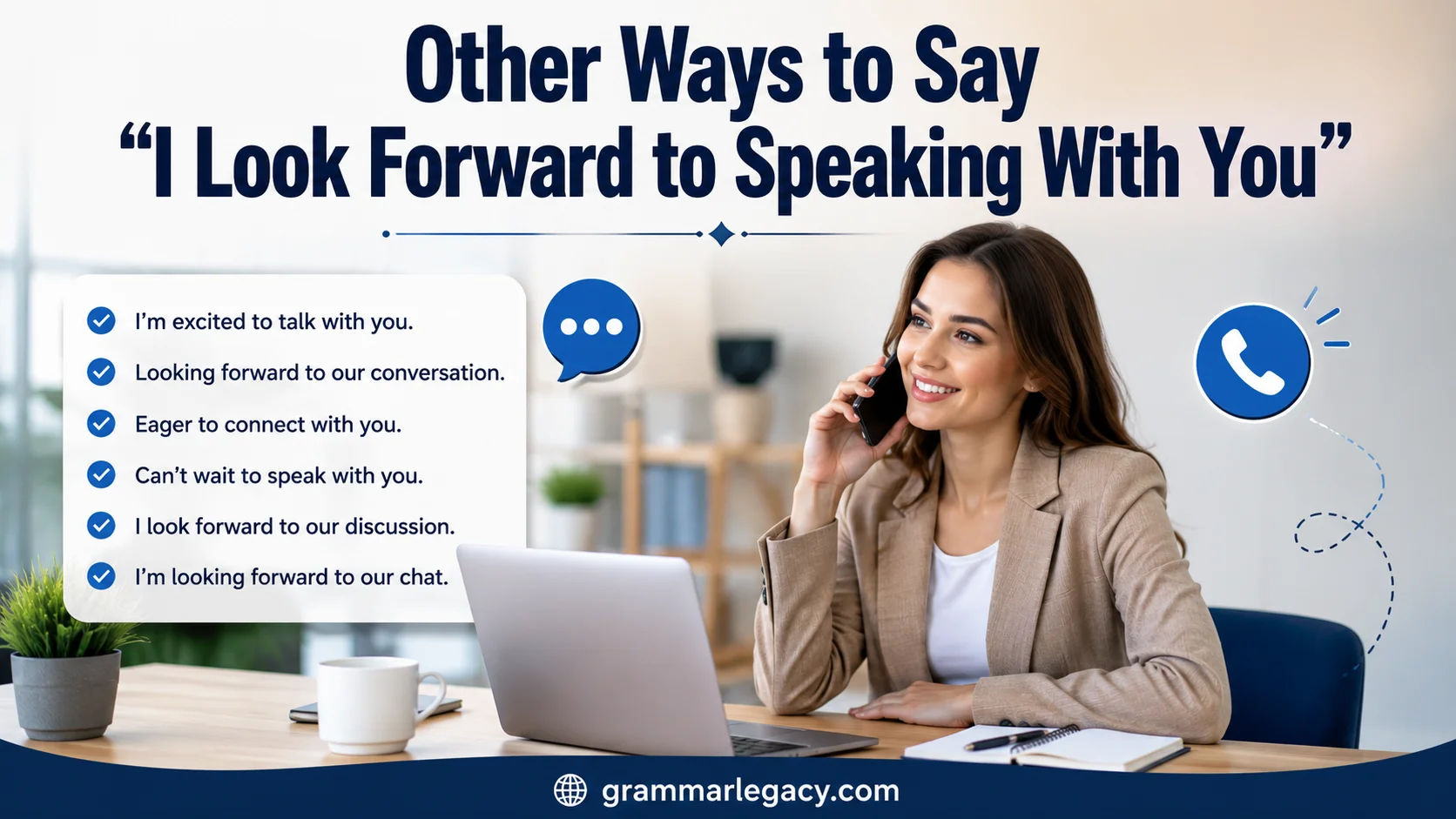

Other Ways to Say “I Look Forward to Speaking With You” (With Examples) is a helpful guide for anyone who wants to improve professional communication. Using different expressions instead of the same closing line makes your emails, messages, and business conversations sound more natural, polite, and engaging. Choosing the right words also shows confidence, respect, and genuine enthusiasm for future discussions while leaving a positive impression.
Learning new ways to express anticipation helps you sound more fluent and thoughtful in every situation. Whether you are writing to a client, colleague, hiring manager, or friend, these carefully selected alternatives and practical examples will help you match the right tone. A simple change in wording can strengthen relationships, improve communication, and make your writing feel warm, authentic, and memorable.
Did You Know About “I Look Forward to Speaking With You”?
“I look forward to speaking with you” is one of the most common closing expressions in professional English. It signals goodwill, interest, and readiness for future communication. In business writing, it is often used to show that the sender values the upcoming conversation and wants to leave a positive final impression.
It is also a flexible phrase. Depending on the context, it can sound formal, friendly, or even slightly warm and personal. That is why many writers search for other ways to say I look forward to speaking with you when they want variety, stronger emotional tone, or a better fit for the relationship.
What Does “I Look Forward to Speaking With You” Mean?
This phrase means that you are expecting and welcoming a future conversation with someone. It shows anticipation in a polite and positive way. In emails, it often appears before or after a request, meeting arrangement, interview reply, or follow-up message.
In simple words, it means: “I am happy that we will talk soon.” It can be used in business, academic, social, or semi-formal settings. The phrase is especially useful because it is respectful without sounding too cold or too familiar.
Professional or Political Way to Say “I Look Forward to Speaking With You”
If you need a more polished and official version, try phrases like “I look forward to our discussion”, “I appreciate the opportunity to speak with you”, or “I welcome the chance to continue this conversation”. These alternatives sound professional, composed, and appropriate for meetings, interviews, negotiations, and formal correspondence.
In political or diplomatic communication, wording matters even more. A phrase like “I look forward to productive dialogue” sounds respectful, neutral, and strategic. It can help maintain a formal tone while still showing cooperation and openness.
“I Look Forward to Speaking With You” Synonyms
- I Look Forward to Our Conversation
- I Look Forward to Speaking Soon
- I Look Forward to Discussing This With You
- I Am Eager to Speak With You
- I Am Looking Forward to Our Call
- I Appreciate the Opportunity to Speak With You
- I Welcome the Chance to Speak With You
- I Am Delighted to Speak With You
- I Am Glad We Will Be Speaking
- I Look Forward to Hearing From You
- I Look Forward to Continuing Our Conversation
- I Look Forward to Connecting With You
- I Would Be Happy to Speak With You
- I Would Welcome the Chance to Speak With You
- I Am Happy to Discuss This Further
- I Look Forward to Your Response
- I Anticipate Speaking With You
- I Am Looking Forward to Our Meeting
- I Look Forward to Collaborating With You
- I Look Forward to Working With You
- I Am Excited to Speak With You
- I Hope to Speak With You Soon
- I Look Forward to Our Next Exchange
- I Would Love to Speak With You
- I Look Forward to the Discussion
- I Await the Opportunity to Speak With You
- I Am Pleased to Speak With You
- I Look Forward to a Meaningful Conversation With You
- I Look Forward to Catching Up With You
- I Look Forward to Speaking With You at Length
1. I look forward to our conversation.
Definition: This is a warm and professional alternative that works well in most settings. It shows that you are expecting the discussion with interest and respect.
Meanings: Anticipating a future talk Welcoming the chance to connect
Example: I look forward to our conversation next Tuesday.
Detailed Explanation: This phrase is slightly broader than “speaking with you,” which makes it useful in both formal and friendly messages. It sounds natural in emails, meeting invitations, and follow-up notes. Because it does not feel overly stiff, it works well when you want to be polite but still sound human. It is especially effective when the conversation may involve ideas, decisions, or introductions.
Tone: Professional, warm, balanced
Best use: Emails, meetings, interviews, networking
2. I look forward to speaking soon.
Definition: This phrase is short, simple, and easy to use in many contexts. It suggests that a conversation will happen very soon.
Meanings: Hoping to talk shortly Expecting a near-future call or chat
Example: I look forward to speaking soon and sharing more details.
Detailed Explanation: This is a convenient alternative when you want to sound friendly without being too formal. It works especially well in texts, emails, or short replies where a long sentence may feel heavy. The phrase creates a sense of momentum and keeps the communication open. It is useful when both people already know a call or reply is coming.
Tone: Friendly, neutral, smooth
Best use: Quick email replies, scheduling, customer communication
3. I look forward to discussing this with you.
Definition: This phrase highlights the topic or subject of the upcoming conversation. It sounds thoughtful and purposeful.
Meanings: Eager to talk about the matter Ready to explore the topic further
Example: I look forward to discussing this with you during our meeting.
Detailed Explanation: Use this phrase when the upcoming talk has a clear purpose, such as a project, proposal, interview, or concern. It helps the reader understand that the conversation will be meaningful and focused. This wording also gives your message a more active and engaged tone. It is especially useful when you want to show preparation and interest.
Tone: Professional, clear, engaged
Best use: Business meetings, proposals, interviews
4. I am eager to speak with you.
Definition: This phrase shows stronger enthusiasm than the original. It communicates genuine interest and excitement.
Meanings: Very interested in talking Ready and enthusiastic to connect
Example: I am eager to speak with you about this opportunity.
Detailed Explanation: This is a stronger alternative when you want your message to feel energetic and sincere. It works well in situations where enthusiasm is appropriate, such as job interviews, new partnerships, or exciting plans. Because the word “eager” carries more emotion, it should be used carefully in formal settings. It is best when you want to show that the conversation matters to you.
Tone: Enthusiastic, positive, sincere
Best use: Interviews, opportunities, introductions
5. I am looking forward to our call.
Definition: This phrase is direct and specific about the communication method. It tells the reader that a phone or video call is expected.
Meanings: Expecting the scheduled call Happy to connect by phone or video
Example: I am looking forward to our call tomorrow morning.
Detailed Explanation: This phrase is practical and useful when a call has already been arranged. It is especially common in workplace communication, client emails, and interview coordination. The wording feels polished and organized, which makes it ideal for planning. It also reduces confusion by clearly naming the type of conversation.
Tone: Professional, clear, courteous
Best use: Calls, interviews, client communication
6. I appreciate the opportunity to speak with you.
Definition: This is a respectful and formal alternative. It shows gratitude before the conversation even begins.
Meanings: Thankful for the chance to talk Respecting the upcoming discussion
Example: I appreciate the opportunity to speak with you about this role.
Detailed Explanation: This phrase is ideal when you want to sound humble, respectful, and professional. It is common in interviews, business introductions, and formal follow-ups. Instead of simply expressing anticipation, it adds appreciation, which makes the message sound more refined. It is a strong choice when first impressions are important.
Tone: Formal, respectful, polished
Best use: Interviews, official emails, senior contacts
7. I welcome the chance to speak with you.
Definition: This phrase sounds open, positive, and courteous. It suggests that the upcoming conversation is appreciated.
Meanings: Glad to have the chance to talk Open to a meaningful conversation
Example: I welcome the chance to speak with you about your ideas.
Detailed Explanation: This wording is useful when you want to sound approachable and professional at the same time. It can be used in business, academic, or diplomatic writing. The phrase feels inclusive and respectful, making it suitable for delicate or important discussions. It also shows that you are not only ready to talk but glad to do so.
Tone: Warm, formal, open
Best use: Business, leadership, formal dialogue
8. I am delighted to speak with you.
Definition: This phrase sounds cheerful and gracious. It adds a touch of elegance and warmth.
Meanings: Very pleased to talk Happy about the conversation
Example: I am delighted to speak with you today.
Detailed Explanation: This phrase works well when you want to sound polished and friendly. It is especially useful in welcome messages, introductions, and high-quality customer service communication. The word “delighted” gives the sentence a refined and positive tone. It can also work in personal messages when you want to express genuine pleasure.
Tone: Warm, elegant, gracious
Best use: Introductions, formal hospitality, client care
9. I am glad we will be speaking.
Definition: This phrase sounds natural and friendly. It communicates positive anticipation without sounding too formal.
Meanings: Happy about the upcoming talk Looking forward to connecting
Example: I am glad we will be speaking before the end of the week.
Detailed Explanation: This is a comfortable, everyday alternative that works well in many situations. It is less formal than some of the other options, but still polite and thoughtful. The phrase feels human and sincere, which makes it useful in regular professional communication. It is a good choice when you want your message to sound warm but not overly polished.
Tone: Friendly, simple, sincere
Best use: General email replies, team communication, follow-ups
10. I look forward to hearing from you.
Definition: This is one of the most common professional alternatives. It shows that you expect a response and value it.
Meanings: Waiting for your reply Happy to continue the exchange
Example: I look forward to hearing from you regarding the next steps.
Detailed Explanation: Although this phrase focuses more on receiving a reply than on speaking directly, it is still closely related and widely used. It works extremely well in business emails, applications, and formal requests. The phrase is polite, clear, and efficient. It is a safe choice when you want to close a message with professionalism.
Tone: Professional, polite, standard
Best use: Email closings, requests, applications
11. I look forward to continuing our conversation.
Definition: This phrase suggests that the discussion has already started. It shows interest in developing the exchange further.
Meanings: Ready to keep talking Interested in moving the discussion forward
Example: I look forward to continuing our conversation after the meeting.
Detailed Explanation: This phrase is especially useful when you have already had some contact with the person. It creates continuity and makes the relationship feel more active. It is ideal for sales, partnerships, mentorship, and ongoing projects. The wording is thoughtful and collaborative, which helps build trust.
Tone: Professional, cooperative, thoughtful
Best use: Follow-ups, ongoing projects, networking
12. I look forward to connecting with you.
Definition: This phrase is friendly and modern. It suggests a future interaction with a smooth, approachable tone.
Meanings: Excited to make contact Ready to build a connection
Example: I look forward to connecting with you on this project.
Detailed Explanation: This phrase is widely used in networking, digital communication, and professional introductions. It can feel less formal than “speaking with you,” especially when you are meeting someone for the first time. It also works well in online and remote settings. The wording suggests both communication and relationship-building.
Tone: Friendly, modern, professional
Best use: Networking, LinkedIn messages, introductions
13. I would be happy to speak with you.
Definition: This phrase is courteous and helpful. It makes the speaker sound open and willing.
Meanings: Glad to have the conversation Willing to talk and assist
Example: I would be happy to speak with you at your convenience.
Detailed Explanation: This is a strong option when you want to sound kind and accommodating. It shows that speaking is not a burden but a welcome opportunity. The phrase is useful in customer service, support emails, and professional replies. It communicates goodwill and flexibility in a very natural way.
Tone: Polite, helpful, warm
Best use: Support, service, client communication
14. I would welcome the chance to speak with you.
Definition: This phrase sounds respectful and gracious. It shows that the conversation is seen as valuable.
Meanings: Happy to have the opportunity Glad to be included in the discussion
Example: I would welcome the chance to speak with you further.
Detailed Explanation: This is a more formal alternative that carries a sense of politeness and professionalism. It is useful when you want to appear considerate without sounding distant. The phrase works well in interviews, proposals, and serious business matters. It suggests that the conversation is not only expected but truly appreciated.
Tone: Formal, respectful, gracious
Best use: Business, interviews, formal invitations
15. I am happy to discuss this further.
Definition: This phrase keeps the focus on the subject of the conversation. It sounds cooperative and easy to understand.
Meanings: Ready to continue the discussion Open to more conversation about the issue
Example: I am happy to discuss this further during our call.
Detailed Explanation: This is an excellent phrase when the conversation involves details, clarification, or next steps. It is less about the relationship and more about the work itself, which makes it practical. It also sounds calm and professional. Because it is simple, it works well in many industries and communication styles.
Tone: Professional, calm, cooperative
Best use: Work emails, problem-solving, meetings
Read More: 30 Other Ways to Say “Please Be Advised” in an Email (With Examples)
16. I look forward to your response.
Definition: This is a formal alternative that focuses on reply and follow-up. It is commonly used when a decision or answer is needed.
Meanings: Waiting for your reply Expecting further communication
Example: I look forward to your response regarding the proposal.
Detailed Explanation: This phrase is useful when the next step depends on the other person’s answer. It is direct but still polite, making it ideal for business writing. It can be used in applications, requests, and formal messages where clarity matters. The phrase keeps the tone professional while moving the communication forward.
Tone: Formal, direct, polite
Best use: Applications, proposals, official follow-up
17. I anticipate speaking with you.
Definition: This phrase is more formal and slightly more advanced. It shows expected future communication in a polished way.
Meanings: Expecting to talk soon Looking ahead to the discussion
Example: I anticipate speaking with you next week about the contract.
Detailed Explanation: This alternative sounds structured and sophisticated. It is often used in formal business writing or legal-style communication. Because it is less emotional than some other phrases, it suits situations where professionalism is the priority. It may sound slightly more distant, so it is best used when a formal tone is appropriate.
Tone: Formal, polished, reserved
Best use: Contracts, legal communication, formal business
18. I am looking forward to our meeting.
Definition: This phrase is specific and clear. It works well when the conversation will happen face-to-face or online.
Meanings: Happy about the scheduled meeting Ready to meet and talk
Example: I am looking forward to our meeting on Friday.
Detailed Explanation: This is one of the most useful alternatives in business settings. It is clear, respectful, and easy to understand. Because it refers to a meeting rather than just speaking, it feels organized and intentional. It is especially effective when you want to confirm scheduling while staying warm.
Tone: Professional, polite, organized
Best use: Appointments, business meetings, interviews
19. I look forward to collaborating with you.
Definition: This phrase highlights teamwork and shared effort. It suggests that the future discussion is part of a joint goal.
Meanings: Excited to work together Ready to build something as a team
Example: I look forward to collaborating with you on this initiative.
Detailed Explanation: This phrase is ideal when the relationship is not just conversational but cooperative. It is common in workplace partnerships, creative projects, and cross-functional communication. It sounds optimistic and teamwork-oriented. Using this phrase shows that you value partnership, not just discussion.
Tone: Professional, collaborative, positive
Best use: Projects, partnerships, teamwork
20. I look forward to working with you.
Definition: This phrase is direct and professional. It shows readiness for shared work or future cooperation.
Meanings: Happy to begin the working relationship Prepared to cooperate on tasks
Example: I look forward to working with you on this assignment.
Detailed Explanation: This is a classic phrase for onboarding, hiring, project work, and formal partnerships. It is slightly broader than “speaking with you” because it suggests future action, not only conversation. That makes it useful when the discussion leads into practical tasks. It is clear, respectful, and easy to trust.
Tone: Professional, practical, positive
Best use: Hiring, project teams, workplace communication
21. I am excited to speak with you.
Definition: This phrase expresses stronger emotion and energy. It makes the upcoming conversation sound important and enjoyable.
Meanings: Very happy to talk Looking forward with enthusiasm
Example: I am excited to speak with you about the new opportunity.
Detailed Explanation: This phrase is great when you want to sound upbeat and personal. It works well in creative industries, friendly business messages, or situations where excitement is appropriate. Because it is energetic, it may feel too informal for very serious settings. Still, it can add warmth and personality to your message.
Tone: Enthusiastic, friendly, lively
Best use: Creative roles, informal business, exciting news
22. I hope to speak with you soon.
Definition: This phrase is gentle and polite. It expresses hope rather than certainty.
Meanings: Wishing for a future talk Hoping to connect soon
Example: I hope to speak with you soon about the next steps.
Detailed Explanation: This alternative is softer than many of the others, which makes it useful when you want to sound considerate. It is especially good in messages where the response may not be immediate. The phrase sounds patient and respectful. It can also help keep the door open without pressuring the other person.
Tone: Polite, gentle, thoughtful
Best use: Follow-ups, sensitive communication, soft closings
23. I look forward to our next exchange.
Definition: This phrase sounds polished and slightly formal. It works well in communication that happens in a series of messages.
Meanings: Ready for the next conversation Glad to continue the exchange
Example: I look forward to our next exchange on this matter.
Detailed Explanation: This phrase is especially useful in written correspondence, professional discussion, or diplomatic-style communication. It sounds thoughtful and controlled, which makes it a good choice for formal contexts. The word “exchange” adds a slightly elevated tone. It is useful when you want to sound respectful and composed.
Tone: Formal, thoughtful, refined
Best use: Official correspondence, diplomacy, structured email threads
24. I would love to speak with you.
Definition: This phrase is warm and personal. It sounds friendly and emotionally open.
Meanings: Very happy to talk Sincerely interested in the conversation
Example: I would love to speak with you when you have time.
Detailed Explanation: This phrase is best for situations where a softer, more personal tone is welcome. It can work in friendly business messages, casual conversations, or romantic communication. Because of the word “love,” it feels more heartfelt than standard professional language. Use it when warmth matters more than formality.
Tone: Warm, personal, affectionate
Best use: Friendly chats, personal emails, romantic tones
25. I look forward to the discussion.
Definition: This phrase focuses on the upcoming topic rather than the person alone. It sounds polished and straightforward.
Meanings: Ready for the conversation Eager to talk about the subject
Example: I look forward to the discussion during tomorrow’s meeting.
Detailed Explanation: This is a useful option when the meeting is formal or topic-centered. It feels more businesslike than “speaking with you,” which can make it a smart choice for reports, presentations, or strategy sessions. It is clear and concise, which helps keep your writing professional. The phrase also avoids sounding overly emotional.
Tone: Professional, balanced, clean
Best use: Meetings, reports, structured discussions
26. I await the opportunity to speak with you.
Definition: This phrase is formal and somewhat old-fashioned in style. It communicates respect and patience.
Meanings: Waiting for the chance to talk Ready when the opportunity arrives
Example: I await the opportunity to speak with you at your convenience.
Detailed Explanation: This phrase sounds highly formal and is best reserved for official or ceremonial writing. It can be useful in diplomatic, legal, or executive communication. Because it sounds more reserved, it may feel less natural in casual modern emails. Still, it can be powerful when a serious and respectful tone is needed.
Tone: Formal, reserved, respectful
Best use: Official letters, diplomacy, executive communication
27. I am pleased to speak with you.
Definition: This phrase is polite and elegant. It expresses positive feeling in a measured way.
Meanings: Happy and honored to talk Glad to be in contact
Example: I am pleased to speak with you regarding your proposal.
Detailed Explanation: This is a refined alternative that works especially well in formal messages. It shows courtesy without becoming overly emotional. The phrase is excellent for clients, senior professionals, and important introductions. It helps you sound confident, respectful, and pleasant at the same time.
Tone: Elegant, polite, professional
Best use: Client emails, formal introductions, business replies
28. I look forward to a meaningful conversation with you.
Definition: This phrase adds depth and intention. It suggests that the talk will be thoughtful and valuable.
Meanings: Looking ahead to a deep conversation Expecting something important to be discussed
Example: I look forward to a meaningful conversation with you soon.
Detailed Explanation: This phrase is ideal when the subject is personal, emotional, or important. It can work in mentorship, counseling, leadership, or relationship-focused communication. The word “meaningful” gives the message a deeper emotional quality. It tells the reader that the conversation is not just routine, but worthwhile.
Tone: Warm, thoughtful, sincere
Best use: Personal messages, mentorship, sensitive discussions
29. I look forward to catching up with you.
Definition: This phrase is casual, friendly, and relaxed. It suggests reconnecting after time apart.
Meanings: Excited to talk again Happy to reconnect and update each other
Example: I look forward to catching up with you over coffee.
Detailed Explanation: This is a great choice when you already know the person well. It feels informal and natural, which makes it perfect for friends, coworkers, or former colleagues. The phrase creates a sense of comfort and familiarity. It works especially well when the conversation is more personal than businesslike.
Tone: Casual, warm, friendly
Best use: Friends, colleagues, informal reconnecting
30. I look forward to speaking with you at length.
Definition: This phrase suggests a more detailed and extended conversation. It works well when the topic needs depth and time.
Meanings: Ready for a longer talk Interested in an in-depth conversation
Example: I look forward to speaking with you at length about the proposal.
Detailed Explanation: This phrase is useful when you expect a conversation that will go beyond a brief exchange. It is helpful in interviews, strategic discussions, planning sessions, or complex topics. The wording shows that you value depth and clarity. It also suggests seriousness and readiness to give the discussion proper attention.
Tone: Formal, thoughtful, detailed
Best use: Long meetings, interviews, complex discussions
FAQs :
1. What does “I look forward to speaking with you” mean?
It is a polite expression used to show that you are excited and willing to have a future conversation with someone. It is common in professional emails, business communication, and formal messages.
2. Is “I look forward to speaking with you” professional?
Yes, it is a highly professional and respectful phrase. It works well in emails to clients, colleagues, recruiters, and business partners.
3. What can I say instead of “I look forward to speaking with you”?
You can use alternatives such as I’m excited to speak with you, I can’t wait to chat, I look forward to our conversation, Talk to you soon, or I’m eager to discuss this with you, depending on the tone.
4. Can I use this phrase in casual conversations?
Yes, but it sounds more formal. For friends or family, you can choose friendlier expressions like Can’t wait to talk to you or Talk to you soon.
5. Why should I use different ways to say “I look forward to speaking with you”?
Using different expressions keeps your writing fresh, avoids repetition, and helps you match the right tone for different situations. It also makes your communication sound more natural and engaging.
Conclusion :
Using Other Ways to Say “I Look Forward to Speaking With You” (With Examples) can make your emails and conversations feel more natural, professional, and memorable. Choosing the right expression for the situation helps you show enthusiasm, respect, and confidence without repeating the same phrase every time. With these alternatives and examples, you can communicate more effectively, build stronger relationships, and leave a lasting positive impression in both personal and professional settings.