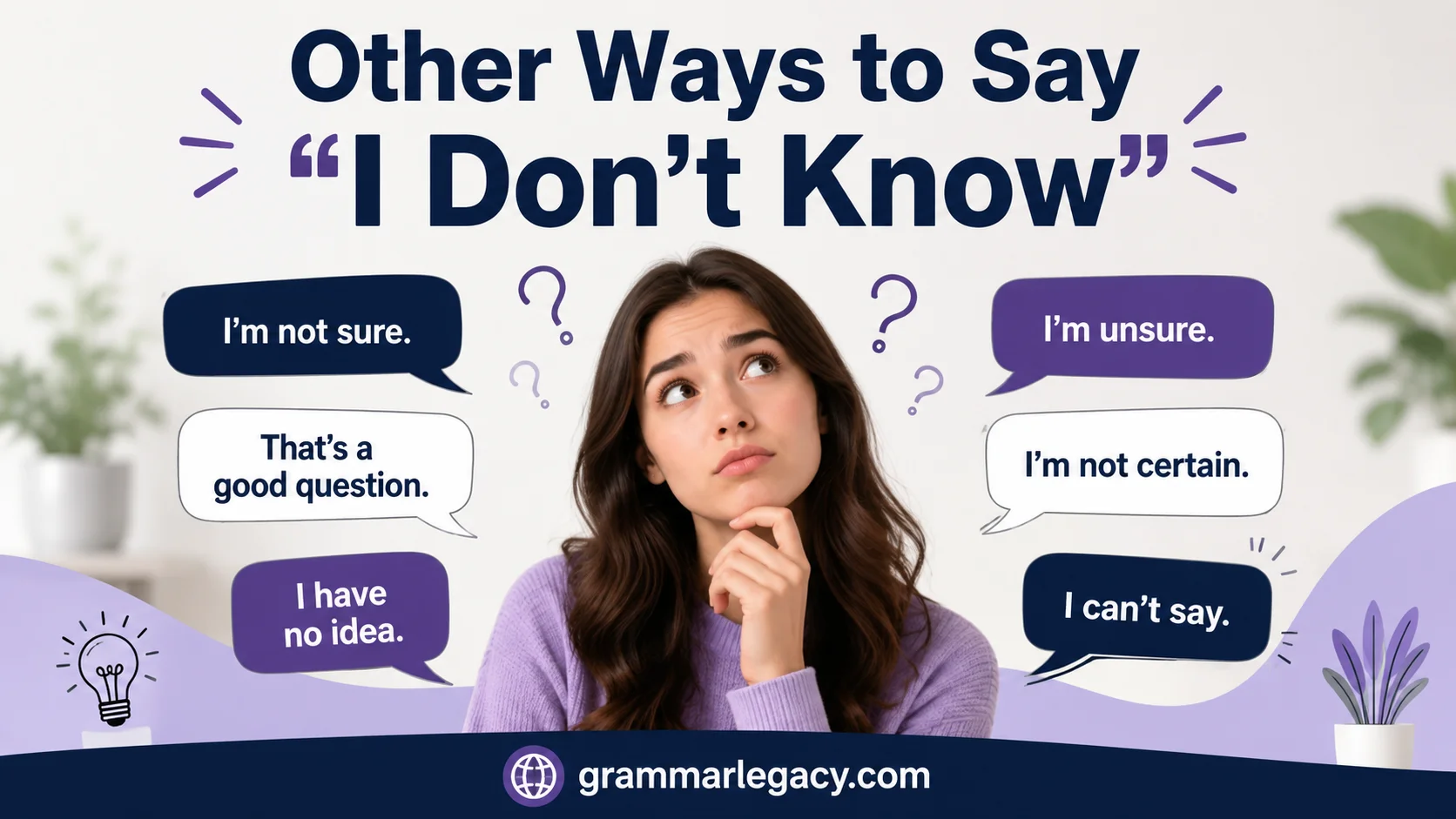

Other Ways to Say “I Don’t Know” (With Examples) is a useful guide for anyone who wants to express uncertainty in a more natural and confident way. Instead of repeating the same phrase, you can learn polite, professional, and friendly alternatives that fit different situations. Using the right words improves your English communication and helps you sound more thoughtful in both work and everyday conversations.
Whether you are speaking with colleagues, friends, teachers, or clients, choosing the right expression can make a positive impression. Phrases like “I’m not sure,” “I’ll find out,” or “Let me check” show honesty, confidence, and respect while keeping your response clear. These alternatives also help you build trust, expand your vocabulary, and communicate with greater clarity and professionalism.
Did You Know About “I Don’t Know”?
The phrase “I don’t know” is one of the most common responses in English, but it is also one of the most flexible. Depending on your tone, it can sound honest, uncertain, relaxed, defensive, or even dismissive. That is why people often choose a softer or more specific alternative.
In communication, the best response is not always the shortest one. Sometimes, saying “I’m not sure” or “Let me check” sounds more helpful than simply saying “I don’t know.” The right phrase can protect your tone, show respect, and keep the conversation moving forward.
What Does “I Don’t Know” Mean?
“I don’t know” means that you do not have the answer, are not fully certain, or cannot confirm something at the moment. It is used when you lack information, when you need time to think, or when you want to avoid guessing.
In English, this phrase can be used in many situations: casual conversations, work emails, academic settings, interviews, and formal discussions. Depending on the context, you may want to sound more polite, more professional, or simply more natural.
Professional or Political Ways to Say “I Don’t Know”
In formal, diplomatic, or political settings, people often avoid saying “I don’t know” directly. Instead, they use careful and polished expressions such as “I’m unable to confirm that at this time,” “That information is still under review,” or “I’d prefer to verify the facts before commenting.”
These versions sound more respectful and controlled. They are useful when you want to stay honest without sounding careless, unprepared, or too casual. In many professional situations, these phrases help you communicate uncertainty while keeping your credibility strong.
“I Don’t Know” Synonyms
- I’m Not Sure
- I’m Not Certain
- I Have No Idea
- I Can’t Say for Sure
- I Don’t Have the Answer
- I Haven’t Figured It Out Yet
- I’m Unsure at the Moment
- I Need to Check
- Let Me Get Back to You
- I’m Still Looking Into It
- I’m Not in a Position to Say
- That’s a Good Question
- I Wish I Knew
- I’m Unclear on That
- I’m Not Fully Aware
- I’m Not the Best Person to Ask
- I’d Rather Not Guess
- I Don’t Have Enough Information
- It’s Unclear to Me
- I’m Still Learning About It
- I Can’t Confirm That
- I’m Unable to Verify That Right Now
- The Details Aren’t Clear Yet
- I’m Drawing a Blank
- I’m at a Loss
- I Couldn’t Tell You
- Your Guess Is as Good as Mine
- Beats Me
- Hard to Say
- That Remains to Be Seen
1. I’m not sure
Definition: This is a simple and natural way to say that you are uncertain about something. It is softer than “I don’t know” and works in both casual and polite conversation.
Meanings: You are unsure, incomplete in your answer, or need more information.
Example: “I’m not sure when the meeting starts.”
Detailed Explanation: This phrase is one of the most useful alternatives because it sounds calm and honest. It does not sound too blunt, so it works well in school, work, and daily life. People often use it when they want to give a careful answer without sounding negative. It also leaves room for more discussion or clarification.
Tone: Neutral, polite, and natural.
Best use: Everyday conversation, emails, classroom answers, and friendly discussions.
2. I’m not certain
Definition: This phrase expresses a higher level of caution than “I’m not sure.” It sounds a little more formal and thoughtful.
Meanings: You do not have full confidence in your answer.
Example: “I’m not certain that this is the correct version.”
Detailed Explanation: Use this phrase when you want to sound careful and professional. It is useful in business, academic, and formal communication. It suggests that you are thinking responsibly instead of guessing too quickly. This makes your answer sound more mature and credible.
Tone: Formal, careful, and respectful.
Best use: Reports, meetings, interviews, and polite professional responses.
3. I have no idea
Definition: This is a stronger and more expressive way of saying you do not know something at all. It sounds very direct and casual.
Meanings: You are completely unaware or have no information.
Example: “I have no idea where he went.”
Detailed Explanation: This phrase is common in spoken English and everyday chats. It can sound surprised, frustrated, or simply honest depending on the voice you use. Because it is stronger than “I’m not sure,” it is best for informal settings. In formal situations, it may sound too blunt.
Tone: Casual, direct, and expressive.
Best use: Friends, family, texts, and relaxed conversations.
4. I can’t say for sure
Definition: This phrase shows that you are not ready to give a definite answer. It sounds thoughtful and controlled.
Meanings: You cannot confirm the fact with confidence.
Example: “I can’t say for sure whether the plan will change.”
Detailed Explanation: This is a very useful phrase when you want to stay honest without sounding unsure in a weak way. It is often used in workplace or analytical conversations. It suggests that more information may be needed before making a final judgment. It also helps you avoid sounding like you are guessing.
Tone: Professional, careful, and balanced.
Best use: Meetings, interviews, reports, and formal discussions.
5. I don’t have the answer
Definition: This is a straightforward way to admit that you do not know something. It is clear, polite, and easy to understand.
Meanings: You are not the person who can provide the answer.
Example: “I don’t have the answer right now, but I can ask someone.”
Detailed Explanation: This phrase is helpful when you want to be honest while still sounding helpful. It works well in customer service, office communication, and classroom settings. Unlike a simple “I don’t know,” it sounds more complete and responsible. It can also lead naturally into offering support or next steps.
Tone: Honest, practical, and professional.
Best use: Workplace conversations, support roles, and polite replies.
6. I haven’t figured it out yet
Definition: This phrase means you are still thinking, learning, or trying to understand something. It shows ongoing effort.
Meanings: You do not know yet, but you are still working on it.
Example: “I haven’t figured it out yet, but I’m still looking.”
Detailed Explanation: This is a great phrase when you want to show progress instead of helplessness. It suggests that the answer may come later, which makes you sound engaged. People use it when solving a problem, learning a topic, or making a decision. It is especially useful when you want to sound active rather than passive.
Tone: Thoughtful, humble, and slightly informal.
Best use: Projects, studies, and problem-solving situations.
7. I’m unsure at the moment
Definition: This is a calm and polite way to say that you are not certain right now. It sounds temporary and considerate.
Meanings: You do not know at this time, but the answer may change.
Example: “I’m unsure at the moment, but I’ll update you soon.”
Detailed Explanation: This phrase is excellent for professional communication because it sounds measured and respectful. It does not close the conversation, which makes it useful in work-related settings. You can use it when you need more time, more data, or more confirmation. It helps you sound composed instead of uncertain in a negative way.
Tone: Polite, professional, and controlled.
Best use: Emails, meetings, and formal updates.
8. I need to check
Definition: This phrase means you do not know yet because you need to verify the information. It is practical and helpful.
Meanings: You must confirm the facts before answering.
Example: “I need to check before I give you the correct time.”
Detailed Explanation: This is one of the best alternatives when accuracy matters. It shows that you care about giving the right answer, not just any answer. People use it in offices, customer support, school, and daily life. It sounds active and responsible because you are planning to follow up.
Tone: Helpful, professional, and responsible.
Best use: When you need to verify details before replying.
9. Let me get back to you
Definition: This phrase shows that you do not know the answer yet, but you plan to respond later. It is polite and service-oriented.
Meanings: You need time before giving a final response.
Example: “Let me get back to you after I confirm the details.”
Detailed Explanation: This is a strong phrase for professional communication because it keeps the conversation open. It tells the other person that you are taking their question seriously. It also avoids a weak or rushed reply when you are not ready. This phrase can build trust because it shows responsibility and follow-through.
Tone: Polite, professional, and reassuring.
Best use: Work emails, client conversations, and formal responses.
10. I’m still looking into it
Definition: This phrase means you are actively trying to find the answer. It sounds engaged and businesslike.
Meanings: You are investigating or researching the topic.
Example: “I’m still looking into it and will share an update soon.”
Detailed Explanation: This is useful when you want to show that you are not ignoring the issue. It works well in office communication, technical support, and service-based roles. The phrase creates confidence because it suggests action. It is a stronger and more useful response than simply saying you do not know.
Tone: Professional, active, and reassuring.
Best use: Workplace updates, customer support, and formal follow-ups.
11. I’m not in a position to say
Definition: This is a polished and diplomatic way to avoid answering directly. It is useful when the information is sensitive or unavailable.
Meanings: You cannot share the answer, even if you may know it.
Example: “I’m not in a position to say at this time.”
Detailed Explanation: This phrase is often used in formal, legal, or political settings. It sounds more careful than saying you do not know, because it may imply privacy or restriction. It helps you avoid overexplaining while staying respectful. This is a strong option when discretion is important.
Tone: Diplomatic, formal, and guarded.
Best use: Corporate, legal, political, and sensitive conversations.
12. That’s a good question
Definition: This phrase buys you a moment and shows that the question is thoughtful. It does not directly admit ignorance, but it often leads to uncertainty.
Meanings: You are thinking, pausing, or preparing a careful answer.
Example: “That’s a good question, and I’d like to check before I answer.”
Detailed Explanation: This phrase is useful when you want to stay polite and avoid sounding unprepared. It works well in interviews, teaching, presentations, and discussions. By praising the question, you also keep the conversation positive. It gives you time to think without sounding defensive.
Tone: Polite, thoughtful, and diplomatic.
Best use: Interviews, meetings, presentations, and class discussions.
13. I wish I knew
Definition: This phrase expresses frustration, curiosity, or concern. It means you genuinely do not have the answer and wish you did.
Meanings: You are uncertain and perhaps disappointed or curious.
Example: “I wish I knew why the schedule changed.”
Detailed Explanation: This phrase feels personal and emotionally natural. It is common in casual speech when someone really wants the answer. It can sound sympathetic, honest, or even a little sad depending on the context. Because of its emotional tone, it is best used in informal or human conversations.
Tone: Casual, emotional, and sincere.
Best use: Friendly conversations, personal chats, and expressive writing.
14. I’m unclear on that
Definition: This phrase shows that the information is not fully clear to you. It sounds calm and professional.
Meanings: You do not fully understand or do not have enough clarity.
Example: “I’m unclear on that point, so I need more details.”
Detailed Explanation: This is a useful phrase when you want to sound intelligent and precise. It works well when the issue is about explanation, instruction, or documentation. Instead of saying you do not know, it shows that the issue may be with the information itself. That makes it especially useful in formal settings.
Tone: Professional, measured, and polite.
Best use: Emails, reports, meetings, and clarification requests.
15. I’m not fully aware
Definition: This phrase means you have some awareness, but not enough to answer confidently. It is softer and more formal.
Meanings: You know a little, but not enough to confirm details.
Example: “I’m not fully aware of the update yet.”
Detailed Explanation: This phrase is useful when you want to avoid sounding uninformed or careless. It sounds diplomatic and leaves room for additional information. People often use it in workplace communication or formal settings. It is a graceful way to show limited knowledge without sounding dismissive.
Tone: Formal, diplomatic, and respectful.
Best use: Professional settings, formal updates, and careful replies.
Read More: 30 Other Ways to Say “Mark Your Calendars” (With Examples)
16. I’m not the best person to ask
Definition: This phrase means someone else likely knows more than you do. It is honest and often helpful.
Meanings: You do not have the right knowledge or expertise.
Example: “I’m not the best person to ask about that software.”
Detailed Explanation: This is a smart phrase when you want to direct the question to a better source. It sounds modest and avoids pretending to know more than you do. People use it in offices, technical settings, and team environments. It also encourages the other person to ask someone more qualified.
Tone: Humble, practical, and polite.
Best use: Workplace conversations, technical topics, and team communication.
17. I’d rather not guess
Definition: This phrase means you do not want to give an answer without enough certainty. It shows caution and responsibility.
Meanings: You prefer accuracy over speculation.
Example: “I’d rather not guess until I have the facts.”
Detailed Explanation: This is an excellent phrase when precision matters. It communicates that you respect the truth and do not want to mislead anyone. It is especially useful in professional, academic, or formal conversations. The phrase also protects you from sounding careless or overly confident.
Tone: Careful, honest, and professional.
Best use: Important decisions, reports, and factual discussions.
18. I don’t have enough information
Definition: This phrase explains that the issue is not just knowledge, but insufficient details. It sounds thoughtful and logical.
Meanings: You need more facts before answering.
Example: “I don’t have enough information to comment yet.”
Detailed Explanation: This is one of the strongest professional alternatives because it sounds specific. It shows that your answer depends on evidence, not just memory or opinion. It works well in business, research, and planning conversations. It can also help you sound more credible and less vague.
Tone: Professional, analytical, and careful.
Best use: Work documents, research, meetings, and formal responses.
19. It’s unclear to me
Definition: This phrase means the matter is not easy for you to understand or confirm. It sounds calm and balanced.
Meanings: The information is confusing or not fully known to you.
Example: “It’s unclear to me which option is best.”
Detailed Explanation: This phrase is useful when you want to sound thoughtful instead of blunt. It suggests that the problem may lie in the explanation, not just your knowledge. That makes it very helpful in work, school, and professional communication. It also invites clarification from the other person.
Tone: Polite, reflective, and neutral.
Best use: Clarification, feedback, and formal discussions.
20. I’m still learning about it
Definition: This phrase shows that you do not know yet because you are in the process of learning. It sounds honest and humble.
Meanings: Your knowledge is still developing.
Example: “I’m still learning about it, so I can’t explain everything yet.”
Detailed Explanation: This is a great phrase when you want to be honest without sounding weak. It works especially well for students, new employees, and beginners. The phrase shows growth, curiosity, and openness to improvement. It also makes your uncertainty sound temporary rather than permanent.
Tone: Humble, positive, and honest.
Best use: Learning environments, training, and casual self-introduction.
21. I can’t confirm that
Definition: This phrase means you are not able to verify the information. It is firm and professional.
Meanings: You do not have proof or trusted confirmation.
Example: “I can’t confirm that without checking the records.”
Detailed Explanation: This phrase is very useful in formal communication where accuracy matters. It sounds stronger and more careful than a simple “I don’t know.” People use it when they want to avoid spreading unverified information. It is especially effective in media, business, and official settings.
Tone: Professional, firm, and careful.
Best use: Official communication, research, and verified responses.
22. I’m unable to verify that right now
Definition: This phrase means you do not have the means or time to confirm the information at the moment. It sounds polished and formal.
Meanings: You cannot check the facts immediately.
Example: “I’m unable to verify that right now, but I will follow up.”
Detailed Explanation: This is a very strong phrase for formal and professional communication. It is specific, respectful, and avoids sounding careless. It also shows that verification matters to you, which builds trust. This is a good option when you want to be diplomatic and accurate.
Tone: Formal, careful, and reliable.
Best use: Business communication, reports, and official replies.
23. The details aren’t clear yet
Definition: This phrase explains that the information is still incomplete or developing. It sounds calm and informative.
Meanings: The answer is not final yet.
Example: “The details aren’t clear yet, so we should wait.”
Detailed Explanation: This is a useful phrase when a situation is still changing. It helps you avoid giving a premature answer. People use it in meetings, news discussions, planning, and project work. It is especially helpful when the truth depends on future updates.
Tone: Neutral, professional, and composed.
Best use: Planning, updates, and changing situations.
24. I’m drawing a blank
Definition: This is an informal phrase meaning that you cannot think of the answer right now. It is very natural in spoken English.
Meanings: Your mind is temporarily empty on the topic.
Example: “I’m drawing a blank on that name.”
Detailed Explanation: This phrase is common when someone forgets something or cannot recall information. It sounds casual and relatable, especially in friendly conversations. It is useful when you want to be honest without sounding too serious. Because it is informal, it is best avoided in official writing.
Tone: Casual, conversational, and relaxed.
Best use: Friends, family, and everyday speech.
25. I’m at a loss
Definition: This phrase means you are confused, uncertain, or unable to figure something out. It sounds a bit more emotional.
Meanings: You do not know what to do or say.
Example: “I’m at a loss as to why this happened.”
Detailed Explanation: This phrase works well when the uncertainty feels deeper than simple not knowing. It can suggest confusion, concern, or frustration. People often use it in reflective or emotional situations. It is more expressive than a plain “I don’t know.” This makes it useful in storytelling, conversation, and thoughtful writing.
Tone: Reflective, emotional, and somewhat formal.
Best use: Personal writing, serious discussions, and expressive speech.
26. I couldn’t tell you
Definition: This phrase means you do not know the answer and cannot provide one. It sounds casual and conversational.
Meanings: You have no reliable answer to give.
Example: “I couldn’t tell you why they decided that.”
Detailed Explanation: This phrase is common in spoken English and often sounds relaxed. It can also imply that the topic is outside your knowledge or control. People use it in friendly conversations when they want to be honest quickly. It is less formal than many of the other alternatives in this list.
Tone: Casual, direct, and natural.
Best use: Informal conversations and quick replies.
27. Your guess is as good as mine
Definition: This phrase means neither person knows the answer. It is a very conversational and friendly way to admit uncertainty.
Meanings: You and the other person have equal knowledge, which is little or none.
Example: “Your guess is as good as mine when it comes to that decision.”
Detailed Explanation: This is a classic idiom in English that feels relaxed and witty. It is often used when two people are equally confused. The phrase can make uncertainty sound lighter and more humorous. It is excellent for casual conversation, but not ideal for formal writing.
Tone: Casual, witty, and friendly.
Best use: Informal chats, humor, and relaxed conversations.
28. Beats me
Definition: This is a very informal phrase used when you do not know something at all. It is short, natural, and conversational.
Meanings: You have no idea or explanation.
Example: “Beats me why he left so early.”
Detailed Explanation: This phrase is extremely common in casual spoken English. It can sound amused, frustrated, or indifferent depending on the tone. Because it is so informal, it should not be used in professional situations. It works well when speaking quickly with people you know well.
Tone: Very casual, relaxed, and informal.
Best use: Friends, family, and everyday speech.
29. Hard to say
Definition: This phrase means the answer is uncertain or not easy to determine. It sounds balanced and slightly formal.
Meanings: There is no clear answer yet.
Example: “Hard to say whether the weather will improve.”
Detailed Explanation: This phrase is useful when the truth depends on many changing factors. It sounds calm and thoughtful, which makes it a good all-purpose alternative. People use it when they want to avoid sounding too confident or too casual. It is especially effective in discussions about outcomes, predictions, or opinions.
Tone: Neutral, thoughtful, and polished.
Best use: Predictions, opinions, and uncertain situations.
30. That remains to be seen
Definition: This phrase means the answer is still unknown because the outcome has not happened yet. It sounds formal and reflective.
Meanings: The final answer is not available yet.
Example: “That remains to be seen after the final review.”
Detailed Explanation: This is one of the most refined ways to express uncertainty. It is often used when the result depends on future events or decisions. The phrase sounds calm, mature, and controlled. It is especially useful in formal, political, or strategic discussions.
Tone: Formal, measured, and elegant.
Best use: Business, politics, forecasts, and serious discussions.
FAQs :
1. What are the best alternatives to say “I don’t know”?
Some of the best alternatives include “I’m not sure,” “Let me check,” “I’ll find out,” “That’s a good question,” and “I’m not certain.” These phrases sound more natural and professional in different situations.
2. Why should I use other ways to say “I don’t know”?
Using different expressions helps you sound more polite, confident, and thoughtful. It also improves your communication skills and prevents your speech from becoming repetitive.
3. Which alternative is best for professional conversations?
In professional settings, phrases like “Let me look into that,” “I’ll get back to you,” or “I need to verify that information” are excellent choices because they show responsibility and accuracy.
4. Can I use these alternatives in everyday conversations?
Yes. Many alternatives, such as “I’m not sure,” “I have no idea,” or “I’m drawing a blank,” work well in casual conversations with friends and family.
5. Will learning these alternatives improve my English?
Absolutely. Expanding your vocabulary with different ways to express uncertainty makes your English more fluent, natural, and engaging while helping you communicate with greater confidence.
Conclusion :
Learning Other Ways to Say “I Don’t Know” (With Examples) can make your communication more natural, professional, and effective. The right alternative allows you to express uncertainty with honesty, confidence, and respect without sounding abrupt or repetitive. By using these expressions in both professional and everyday conversations, you can improve your English vocabulary, build trust, and create more meaningful interactions.