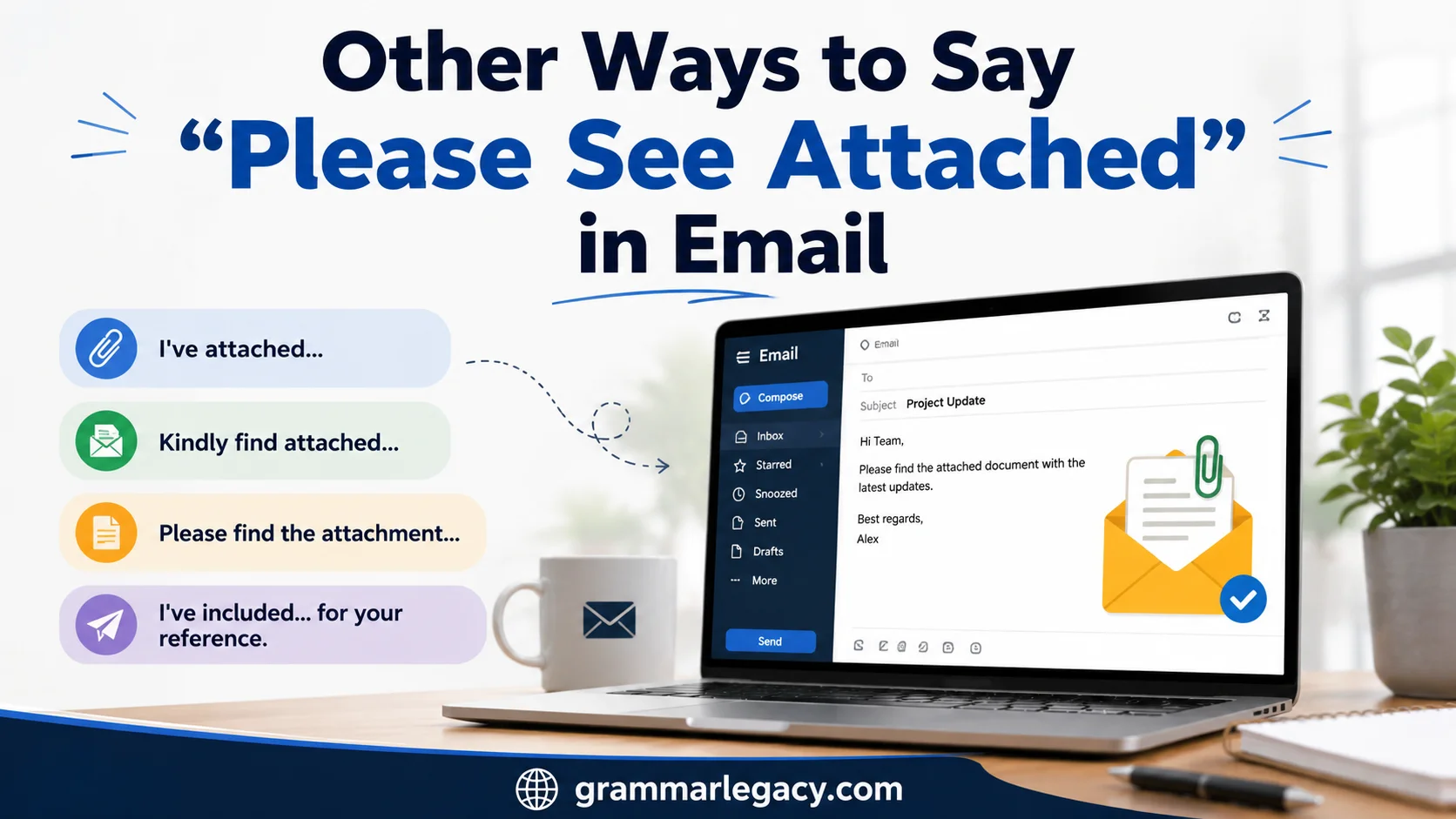

Other Ways to Say “Please See Attached” in Email (With Examples) is a helpful guide for anyone who wants to write professional, clear, and polite emails. Using the same phrase repeatedly can make your messages sound repetitive. Learning better alternatives helps you communicate more naturally while sharing documents, reports, PDFs, contracts, or resumes. The right wording creates a stronger impression and makes your email feel more friendly, thoughtful, and professional without losing clarity.
Choosing different expressions improves your email writing and keeps your communication fresh and engaging. Whether you are sending a proposal, presentation, draft, reference material, or an internal update, the right phrase matches the situation and your audience. Small changes in language can improve tone, flow, and workplace communication, making every message easier to understand while helping you sound more confident, courteous, and approachable.
Did You Know About Other Ways to Say “Please See Attached” in Email?
The phrase “please see attached” is understood almost everywhere in business communication, but it is not the only option. Many professionals prefer alternatives like “please find attached,” “attached for your review,” or “I’ve included the file” because they sound smoother in modern email writing.
A good attachment phrase can also reduce confusion. For example, some readers scan emails quickly and may miss a file if the wording is too vague. A clear phrase such as “I’ve attached the report for your review” tells them exactly what to look for and why it matters.
What Does “Please See Attached” Mean in Email?
“Please see attached” means that a file has been included with the email and the reader should open it. It is a simple way to point attention toward the attachment without adding extra explanation.
In many cases, the phrase is used to share documents, reports, invoices, forms, resumes, images, proposals, or presentations. While the phrase is perfectly correct, it can sound a little formal or repetitive if used too often, which is why alternatives are helpful.
Professional or Polite Ways to Say “Please See Attached” in Email
If you want a more polished tone, choose phrases like “please find attached,” “kindly review the attached file,” or “attached for your reference.” These options sound respectful and work well in business emails, client communication, and formal requests.
If the email is less formal, you can use wording such as “I’ve attached the file,” “here is the document,” or “I’m sharing the file with you.” These options feel friendly and natural while still staying clear.
“Please See Attached” Synonyms
- Please Find Attached
- Attached Is the File
- I’ve Included the Document
- Kindly See the Attached File
- Please Review the Attachment
- Enclosed Is the Document
- The Requested File Is Attached
- I Am Sharing the File Here
- Please Refer to the Attachment
- I Have Attached the Report
- Attached for Your Review
- You Will Find the File Attached
- Please Check the Attached Document
- I’ve Attached It for Convenience
- I’m Sending This Along with the File
- Please See the Enclosed File
- Kindly Find the Document Attached
- I’ve Added the Attachment Below
- Attached Please Find
- Here Is the File You Requested
- I’ve Sent the Supporting Document
- Please Take a Look at the Attachment
- The File Is Available Here
- I’ve Attached the Details
- Please Find the File Enclosed
- I’m Attaching the Relevant Document
- See the Attached Note
- Please Review the Enclosed Document
- The Attachment Is Included Here
- I’ve Shared the Relevant File
1. Please find attached
Definition: This is one of the most classic email phrases for sharing a file. It is formal, respectful, and widely accepted in professional writing.
Meanings: It means the file is attached to the email and should be reviewed by the reader.
Example: Please find attached the project proposal for your review.
Detailed Explanation: This phrase is a strong choice when you want your email to sound professional and polished. It works especially well in office communication, client emails, and formal requests. Because it is so common, it feels familiar and easy to understand. It is a safe option when you are not sure which tone to use.
Tone: Formal, professional, and polite.
Best use: Business emails, reports, applications, and client communication.
2. Attached is the file
Definition: This phrase directly introduces the attachment in a clean and simple way. It is short and practical.
Meanings: It tells the reader that the file has been included with the email.
Example: Attached is the file you requested yesterday.
Detailed Explanation: This wording is especially useful when you want to be clear without sounding too wordy. It works well in workplace emails where speed and clarity matter. The structure feels smooth and modern, so it often sounds less stiff than older phrases. It is a good choice when the attachment is the main point of the message.
Tone: Direct, professional, and efficient.
Best use: Quick business updates, internal communication, and short replies.
3. I’ve included the document
Definition: This is a friendly and straightforward way to let someone know the file is part of the email. It sounds natural and human.
Meanings: It means the document is attached or added for the reader to open.
Example: I’ve included the document with the updated terms.
Detailed Explanation: This phrase feels conversational while still remaining professional. It works well when you want to sound approachable and helpful. Because it uses first-person language, it feels more personal than some formal alternatives. It is a great option for team communication or warm client emails.
Tone: Friendly, clear, and professional.
Best use: Internal emails, collaborative work, and polite follow-ups.
4. Kindly see the attached file
Definition: This is a courteous phrase that asks the reader to look at the attachment. It is polite and respectful.
Meanings: It means the file should be opened and reviewed carefully.
Example: Kindly see the attached file for the revised schedule.
Detailed Explanation: This alternative sounds especially polite in formal communication. It is useful when you want to show respect, especially in client or service emails. The word “kindly” gives the sentence a softer tone. It may sound slightly traditional, but it is still effective in many business settings.
Tone: Polite, formal, and respectful.
Best use: Client emails, formal notices, and service-related messages.
5. Please review the attachment
Definition: This phrase asks the reader to open the file and check it carefully. It is clear and action-oriented.
Meanings: It means the reader should examine the attached file.
Example: Please review the attachment before our meeting tomorrow.
Detailed Explanation: This is a very useful option when you want the recipient to do something specific. It sounds more purposeful than a simple reference to an attachment. The phrase works well for documents that need approval, feedback, or confirmation. It is especially good when the file contains important details.
Tone: Professional, polite, and task-focused.
Best use: Approvals, reviews, project files, and formal feedback requests.
6. Enclosed is the document
Definition: This is a formal phrase that is often used in business and legal writing. It sounds elegant and traditional.
Meanings: It means the document is included with the message.
Example: Enclosed is the document for your records.
Detailed Explanation: This phrase works best in more formal or old-fashioned business communication. It can sound especially appropriate in legal, administrative, or official contexts. Although it is less common in casual emails, it still sounds correct and polished. Use it when you want to create a serious and professional impression.
Tone: Formal, traditional, and official.
Best use: Legal documents, official correspondence, and administrative emails.
7. The requested file is attached
Definition: This phrase is useful when someone has already asked for a specific file. It is direct and reassuring.
Meanings: It means the file the reader wanted is now included in the email.
Example: The requested file is attached for your convenience.
Detailed Explanation: This wording is excellent for customer service, follow-up emails, and work requests. It quickly tells the reader that their request has been fulfilled. The phrase is efficient and leaves very little room for confusion. It is a strong choice when you want to sound organized and responsive.
Tone: Professional, helpful, and clear.
Best use: Request follow-ups, support emails, and client responses.
8. I am sharing the file here
Definition: This phrase sounds natural and conversational. It is a good option when you want to keep the email simple.
Meanings: It means the file is being sent with the email.
Example: I am sharing the file here so you can review it today.
Detailed Explanation: This wording feels modern and easy to read. It works well in emails that aim for a friendly, collaborative tone. Because it avoids overly formal language, it can make your writing feel more approachable. It is especially good when you are sharing something quickly.
Tone: Casual, friendly, and professional.
Best use: Team chats by email, informal business writing, and fast updates.
9. Please refer to the attachment
Definition: This phrase directs the reader’s attention to the file. It is neat and professional.
Meanings: It means the reader should use the attachment for more information.
Example: Please refer to the attachment for the full list of changes.
Detailed Explanation: This expression is useful when the file contains details that support your message. It works well in reports, instructions, and formal updates. The phrase sounds slightly more instruction-based than some others. It is a good fit when the attachment has important reference material.
Tone: Professional, clear, and formal.
Best use: Reports, instructions, policies, and reference documents.
10. I have attached the report
Definition: This is a simple and specific phrase that names the file directly. It is easy to understand at a glance.
Meanings: It means the report is included with the email.
Example: I have attached the report for last quarter’s performance.
Detailed Explanation: This phrase works very well when the document type is important. It avoids vague wording and tells the reader exactly what has been sent. That makes it especially useful in business, academic, and formal emails. It can also reduce follow-up questions because the message is so clear.
Tone: Clear, professional, and direct.
Best use: Reports, summaries, business updates, and academic communication.
11. Attached for your review
Definition: This phrase politely asks the reader to examine the attachment. It is useful in professional settings.
Meanings: It means the file has been sent and is ready for review.
Example: Attached for your review is the revised contract.
Detailed Explanation: This is one of the most practical phrases for workplace writing. It signals that the file is not just included, but also meant to be looked at carefully. The phrase feels polished without sounding overly complicated. It is a strong option when you need feedback, approval, or confirmation.
Tone: Professional, respectful, and efficient.
Best use: Contracts, proposals, drafts, and approval requests.
12. You will find the file attached
Definition: This phrase is polite and slightly more formal. It tells the reader exactly where to look.
Meanings: It means the file has been included in the message as an attachment.
Example: You will find the file attached below for your convenience.
Detailed Explanation: This phrase sounds smooth and refined in written communication. It is often used when you want the email to feel courteous and structured. The wording gently guides the reader to the attachment without sounding demanding. It is a good fit for formal correspondence or polished business writing.
Tone: Polite, formal, and composed.
Best use: Office communication, formal notices, and client emails.
13. Please check the attached document
Definition: This phrase asks the reader to open and examine the file. It is direct and useful.
Meanings: It means the document should be reviewed after opening the attachment.
Example: Please check the attached document and let me know your thoughts.
Detailed Explanation: This wording is especially useful when you want feedback on a document. It is clear, simple, and easy for the reader to act on. The phrase works well in emails about edits, approvals, or corrections. It also helps make your request sound practical instead of vague.
Tone: Professional, active, and clear.
Best use: Draft reviews, content feedback, and document revisions.
14. I’ve attached it for convenience
Definition: This phrase is thoughtful and reader-friendly. It suggests the file is included to make things easier.
Meanings: It means the file is attached so the reader can access it quickly.
Example: I’ve attached it for convenience in case you need it today.
Detailed Explanation: This is a helpful phrase when you want to sound considerate and useful. It tells the reader that you are trying to save them time. The wording feels warm without becoming too casual. It is a good choice for customer support, follow-ups, and helpful reminders.
Tone: Considerate, friendly, and professional.
Best use: Helpful follow-ups, support emails, and client care.
15. I’m sending this along with the file
Definition: This phrase sounds natural and conversational. It makes the email feel personal and easy to read.
Meanings: It means the file is being included in the email message.
Example: I’m sending this along with the file you asked for earlier.
Detailed Explanation: This option is especially good when you want to sound human and approachable. It can work well in emails that are friendly but still work-related. The phrase feels less formal than many traditional attachment expressions. It is useful when you are sending both a message and a supporting document.
Tone: Friendly, natural, and warm.
Best use: Team emails, informal client communication, and casual professional writing.
Also Read This: 30 Other Ways to Say “Just to Confirm” (With Examples)
16. Please see the enclosed file
Definition: This is a formal phrase that is similar to “please see attached.” It has a traditional business tone.
Meanings: It means the file has been included in the email for review.
Example: Please see the enclosed file for the updated invoice.
Detailed Explanation: This phrase is often used in more formal or structured communication. It sounds polished and appropriate for official messages. The word “enclosed” gives the sentence a classic professional feel. It may be especially useful in letters, formal emails, or administrative writing.
Tone: Formal, classic, and professional.
Best use: Invoices, official files, and structured business communication.
17. Kindly find the document attached
Definition: This is a polite and formal phrase that is often used in business writing. It is respectful and smooth.
Meanings: It means the document is attached and ready to be viewed.
Example: Kindly find the document attached for your reference.
Detailed Explanation: This is a good choice when you want your writing to sound courteous and polished. It is common in professional emails, especially when addressing clients or seniors. The phrase sounds organized and carefully written. It is a strong fit when tone and respect matter as much as clarity.
Tone: Polite, formal, and respectful.
Best use: Corporate emails, formal notices, and client communication.
18. I’ve added the attachment below
Definition: This phrase is simple and easy to follow. It sounds modern and practical.
Meanings: It means the file has been included later in the email or message.
Example: I’ve added the attachment below for your convenience.
Detailed Explanation: This phrase is useful when you want to guide the reader directly to the file. It sounds friendly and straightforward without being too casual. The word “below” can help if your email contains a visible attachment section or link. It is especially helpful in emails with several items or a longer message.
Tone: Clear, modern, and practical.
Best use: Digital communication, online forms, and short workplace emails.
19. Attached please find
Definition: This is a very traditional business phrase. It is formal and widely recognized.
Meanings: It means the file has been attached and the reader should review it.
Example: Attached please find the final version of the agreement.
Detailed Explanation: This expression is often seen in older business writing and formal letters. It still sounds correct, although it may feel a little old-fashioned in casual emails. It works best when you want a very formal and established tone. You may use it when writing to senior professionals or in official documents.
Tone: Traditional, formal, and businesslike.
Best use: Official correspondence, legal writing, and formal business emails.
20. Here is the file you requested
Definition: This phrase is direct and helpful. It tells the reader exactly what has been sent.
Meanings: It means the file they asked for is now included.
Example: Here is the file you requested for the meeting.
Detailed Explanation: This is a very reader-friendly way to share a document. It is ideal when someone has already made a specific request. The phrase feels warm, clear, and service-oriented. It can reduce friction because the reader immediately knows their request has been answered.
Tone: Helpful, clear, and friendly.
Best use: Request responses, support emails, and quick file sharing.
21. I’ve sent the supporting document
Definition: This phrase is useful when the attachment provides extra proof, details, or context. It sounds neat and professional.
Meanings: It means an additional document has been included to support the message.
Example: I’ve sent the supporting document to confirm the figures.
Detailed Explanation: This phrase works especially well when the attachment is not the main message but supports it. It is often used in business, academic, or administrative communication. The wording sounds organized and intentional. It is a strong option when clarity and documentation matter.
Tone: Professional, precise, and informative.
Best use: Evidence, backup files, claims, and supporting records.
22. Please take a look at the attachment
Definition: This is a polite and conversational way to ask the reader to open the file. It feels natural and respectful.
Meanings: It means the attachment should be reviewed or checked.
Example: Please take a look at the attachment and share your feedback.
Detailed Explanation: This phrase sounds softer than a command and more like a polite request. It is useful when you want to encourage review without sounding too formal. The wording is friendly and suitable for many work situations. It is especially good when feedback or input is needed after reading the file.
Tone: Friendly, polite, and approachable.
Best use: Feedback requests, team emails, and collaborative work.
23. The file is available here
Definition: This phrase is simple and modern. It is useful when you want to point the reader to the file directly.
Meanings: It means the file can be accessed in the email or linked location.
Example: The file is available here for download.
Detailed Explanation: This wording is especially practical for digital communication. It can be helpful when files are shared through email, cloud links, or online systems. The phrase is not overly formal, but it remains clear and professional. It is a good option when you want to keep the message short and easy to scan.
Tone: Modern, direct, and practical.
Best use: Shared drives, file links, and online document delivery.
24. I’ve attached the details
Definition: This phrase is useful when the attachment contains the important information itself. It sounds concise and natural.
Meanings: It means the details are included in the attached file.
Example: I’ve attached the details for the upcoming event.
Detailed Explanation: This phrase works best when the attachment contains key information, not just a supporting file. It is short, easy to understand, and suitable for both work and casual use. The wording is helpful when the file includes instructions, schedules, or specifications. It can also make the email sound more personal and less formal.
Tone: Simple, friendly, and clear.
Best use: Event information, plans, instructions, and quick updates.
25. Please find the file enclosed
Definition: This is another formal variation of attachment wording. It is polished and traditional.
Meanings: It means the file is included with the email.
Example: Please find the file enclosed for your review.
Detailed Explanation: This phrase is useful in formal business writing and official communication. It has a serious and respectful tone that suits professional settings. The word “enclosed” makes it sound slightly more traditional than “attached.” It is a strong choice for documents that need careful attention.
Tone: Formal, respectful, and traditional.
Best use: Official records, business letters, and formal file sharing.
26. I’m attaching the relevant document
Definition: This phrase shows that the file is specifically connected to the topic being discussed. It sounds thoughtful and precise.
Meanings: It means the correct or useful document has been included.
Example: I’m attaching the relevant document for your approval.
Detailed Explanation: This is a useful phrase when you want to make the email sound purposeful. It helps the reader understand that the attached file is the right one for the situation. The wording is professional and especially useful in business or academic exchanges. It can prevent confusion when several documents may be involved.
Tone: Professional, precise, and helpful.
Best use: Approvals, project files, and topic-specific documents.
27. See the attached note
Definition: This phrase is short and to the point. It is useful when the attachment is a note, message, or brief explanation.
Meanings: It means the reader should open the attached note.
Example: See the attached note for additional information.
Detailed Explanation: This phrase is best when the attachment is small and simple, such as a note or short update. It sounds direct and easy to understand. The wording is not overly formal, so it works well in everyday professional communication. It is a good option when you do not need to write a long explanation.
Tone: Direct, simple, and practical.
Best use: Brief notes, reminders, and short supporting messages.
28. Please review the enclosed document
Definition: This phrase is formal and professional. It asks the reader to look over the attached file carefully.
Meanings: It means the document should be examined and considered.
Example: Please review the enclosed document before signing.
Detailed Explanation: This is a strong option when the attachment needs review, approval, or action. It sounds polished and suitable for official or corporate communication. The phrase is especially helpful when the file contains important information. It gives the email a clear purpose and professional tone.
Tone: Formal, respectful, and action-oriented.
Best use: Contracts, approvals, policy documents, and official reviews.
29. The attachment is included here
Definition: This phrase is very clear and modern. It tells the reader exactly where the file can be found.
Meanings: It means the attachment has been included in the email message.
Example: The attachment is included here for your convenience.
Detailed Explanation: This expression is helpful when you want to be direct without sounding too stiff. It is easy to read and works well in simple business communication. The wording can be useful in emails that are short, practical, and focused. It is especially helpful when multiple items are being shared in one message.
Tone: Clear, professional, and straightforward.
Best use: Short emails, quick sharing, and practical workplace messages.
30. I’ve shared the relevant file
Definition: This phrase sounds polished and natural. It tells the reader that the correct file has already been sent.
Meanings: It means the file related to the topic is now attached or shared.
Example: I’ve shared the relevant file for your reference.
Detailed Explanation: This is a strong closing-style phrase when you want to sound organized and thoughtful. It works well in business emails, team communication, and client follow-ups. The word “relevant” helps reassure the reader that the right document has been included. It is a smooth choice when clarity and professionalism both matter.
Tone: Professional, calm, and helpful.
Best use: Work updates, client emails, and reference materials.
FAQs:
1. What does “Please See Attached” mean?
“Please see attached” is a polite way to tell the reader that a file, such as a document, PDF, or image, has been included with the email for review.
2. Is “Please See Attached” professional?
Yes, it is a professional and widely accepted phrase. However, using different alternatives can make your emails sound more natural, engaging, and less repetitive.
3. What can I say instead of “Please See Attached” in an email?
You can use phrases like “I’ve attached the file,” “Kindly find the attached document,” “Attached is the report,” or “Please review the attached file.”
4. When should I use alternatives to “Please See Attached”?
Use alternatives when sending reports, contracts, proposals, resumes, presentations, or other attachments to clients, colleagues, employers, or business partners to improve your email tone.
5. Why should I avoid repeating “Please See Attached”?
Repeating the same phrase in every email can make your writing sound robotic and generic. Using varied expressions keeps your communication professional, clear, friendly, and more effective.
Conclusion:
Using different other ways to say “Please See Attached” in Email can make your messages sound more professional, polite, and reader-friendly. The right phrase depends on your audience, purpose, and the type of file you are sharing. By choosing the most suitable alternative, you can improve your email writing, strengthen workplace communication, and leave a positive impression every time you send an attachment.