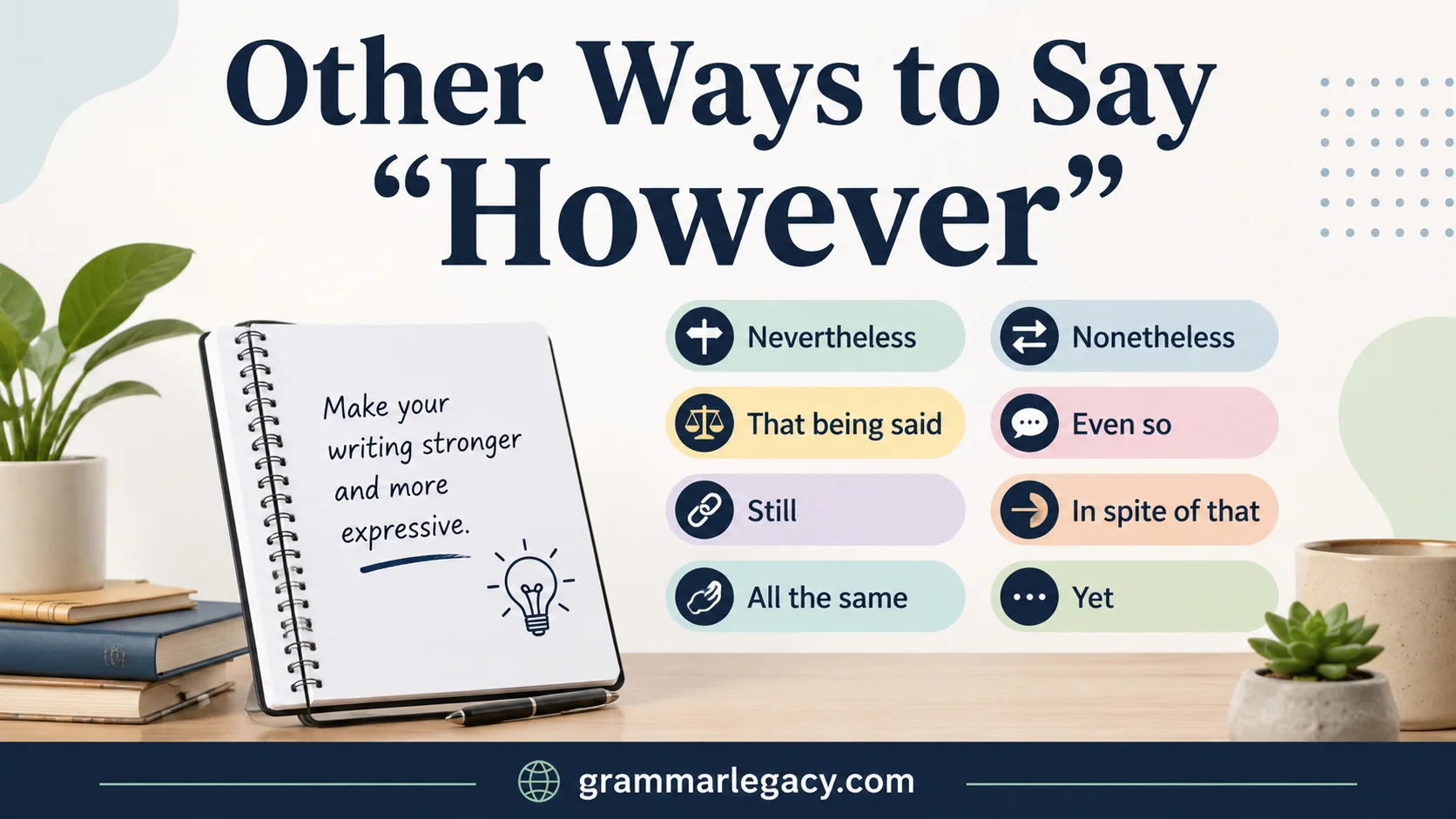

Other Ways to Say “However” (With Examples) can make your writing more natural, engaging, and professional. Although however is one of the most common transition words, using it repeatedly can make your sentences sound repetitive. Learning different ways to express contrast, opposing ideas, or exceptions helps improve the flow, readability, and overall quality of your writing while allowing you to choose the best expression for every situation.
Whether you’re writing an essay, email, report, or everyday message, using a variety of transition words keeps your content fresh and easier to read. Since however often works like but as a conjunctive adverb, selecting the right alternative helps your ideas connect more smoothly. By understanding these useful expressions, you can write with greater confidence, create a polished style, and communicate your message in both formal and conversational English.
Did You Know About Other Ways to Say “However”?
Many English learners use however again and again because it is familiar and safe. But English offers many transition words, contrast phrases, and sentence connectors that can make your writing more advanced and engaging. Some alternatives sound more formal, some sound more natural in conversation, and some are better for emotional, persuasive, or professional writing.
Using the right alternative also improves readability, flow, and SEO content quality. That is why strong writers often vary their transition words instead of depending on just one phrase. With the right choice, your writing becomes clearer, richer, and more human.
What Does “However” Mean?
However is a contrast word used to introduce a different idea, an exception, or a correction. It usually means “in contrast,” “on the other hand,” or “nevertheless.” Writers use it to show that the second part of a sentence does not fully match the first part.
For example, you might say: “The weather looked perfect; however, the picnic was canceled.” Here, however shows a surprising contrast between expectation and reality. It is one of the most common and flexible linking words in English.
Professional or Political Way to Say “However”
In professional, diplomatic, or political writing, however often needs a more polished and strategic alternative. Words like “nevertheless,” “nonetheless,” “that said,” “in contrast,” and “be that as it may” sound more formal and controlled. These phrases are useful when you want to disagree politely, present balanced arguments, or soften strong statements.
In political speech or formal public communication, these alternatives help speakers sound measured and respectful. For example, “That said” can sound thoughtful, while “nevertheless” sounds serious and authoritative. Choosing the right one depends on how strong, soft, or diplomatic you want your message to be.
“However” Synonyms
- Nevertheless
- Nonetheless
- Yet
- Still
- On the Other Hand
- That Said
- Even So
- In Contrast
- By Contrast
- Alternatively
- Instead
- Though
- Although
- Even Though
- While
- Whereas
- Despite That
- In Spite of That
- All the Same
- Be That as It May
- Nonetheless Still
- Admittedly
- Granted
- At the Same Time
- In Any Case
- Anyway
- Yet Still
- Concerning That
- On the Contrary
- Yet in Reality
1. Nevertheless
Definition: Nevertheless is a formal contrast word used to show that something is true despite a previous statement. It is one of the strongest and most polished alternatives to however.
Meanings: It means “in spite of that” or “even so.”
Example: The task was difficult; nevertheless, she finished it on time.
Detailed Explanation: Nevertheless is often used in essays, reports, speeches, and academic writing when you want to sound serious and confident. It works well when the second idea is surprising but still true. This phrase is slightly more formal than however, so it adds weight to your sentence. It is especially useful when you want to emphasize determination, balance, or a strong turning point in an argument.
Tone: Formal, confident, professional.
Best use: Academic writing, business reports, speeches, and formal arguments.
2. Nonetheless
Definition: Nonetheless is a formal phrase that introduces a contrast while keeping the sentence smooth. It is very close in meaning to nevertheless and however.
Meanings: It means “even so” or “despite that.”
Example: The forecast was poor; nonetheless, the event continued outdoors.
Detailed Explanation: Nonetheless is often preferred in polished writing because it sounds refined and balanced. It helps you acknowledge a problem without sounding negative or dramatic. This phrase is common in formal essays, professional documents, and thoughtful commentary. It is a great choice when you want to show calm disagreement or resilience.
Tone: Formal, neutral, elegant.
Best use: Reports, essays, editorials, and formal conversations.
3. Yet
Definition: Yet is a short contrast word used to show an unexpected result or opposing idea. It is simple, clean, and widely used in both writing and speech.
Meanings: It means “but still” or “even so.”
Example: He was tired, yet he kept working.
Detailed Explanation: Yet is especially useful because it is brief and natural. It can connect two opposite ideas quickly without making the sentence feel heavy. Writers use it in casual, formal, and literary contexts. It works well when the contrast is clear and direct, and when you want the sentence to feel smooth and modern.
Tone: Neutral, concise, versatile.
Best use: Everyday writing, essays, storytelling, and clear argumentation.
4. Still
Definition: Still is a simple transition word used to show that something remains true despite another fact. It often softens the contrast and sounds natural.
Meanings: It means “even so” or “despite that.”
Example: The deadline was tight; still, the team delivered great work.
Detailed Explanation: Still is one of the easiest alternatives to however because it sounds conversational and direct. It is less formal than nevertheless or nonetheless, but it is extremely common in speech and writing. This makes it perfect for blogs, emails, and everyday communication. It works best when you want a friendly, relaxed tone.
Tone: Casual, natural, friendly.
Best use: Blog posts, emails, conversation, and simple explanations.
5. On the Other Hand
Definition: On the other hand is a phrase used to present a different point of view or a contrasting idea. It is one of the most familiar alternatives to however.
Meanings: It means “in contrast” or “from a different perspective.”
Example: The apartment is small; on the other hand, it is very affordable.
Detailed Explanation: This phrase is useful when comparing two sides of an issue. It helps writers present balance and fairness, especially in reviews, debates, and analytical writing. It is often used when the contrast is not just a surprise, but a second valid viewpoint. Because it is slightly longer, it works best when clarity is more important than brevity.
Tone: Balanced, thoughtful, neutral.
Best use: Comparison writing, reviews, arguments, and analysis.
6. That Said
Definition: That said is a conversational transition phrase used to move from one idea to a related contrast. It sounds modern, smooth, and human.
Meanings: It means “even so” or “with that in mind.”
Example: The service was good; that said, the wait time was too long.
Detailed Explanation: That said is often used in spoken English and modern writing because it feels natural and relaxed. It is a great alternative when you want to sound thoughtful without sounding stiff. It helps you make a point gently while still acknowledging the previous idea. It works especially well in blogs, interviews, and online content.
Tone: Warm, modern, balanced.
Best use: Blog writing, conversation, reviews, and professional but friendly communication.
7. Even So
Definition: Even so is a short phrase used to show that something is true despite a previous fact. It is simple and emotionally flexible.
Meanings: It means “despite that” or “still.”
Example: The journey was long; even so, they enjoyed every moment.
Detailed Explanation: Even so feels a little softer than however, which makes it useful in emotional, reflective, or persuasive writing. It can show strength, patience, or acceptance. This phrase is easy to understand and easy to use in both formal and informal contexts. It is especially effective when you want a smooth and gentle contrast.
Tone: Soft, calm, reflective.
Best use: Narrative writing, blogs, casual conversation, and emotional content.
8. In Contrast
Definition: In contrast is a transition phrase used to show a clear difference between two ideas. It is direct and analytical.
Meanings: It means “compared with that” or “showing the difference.”
Example: The first design was bold; in contrast, the second was minimal.
Detailed Explanation: This phrase is excellent for comparison writing because it clearly signals a change in direction. It is often used in academic work, professional reports, and explanatory content. Unlike however, which can sometimes sound general, in contrast is more specific and intentional. It helps readers immediately understand that two things are being compared.
Tone: Formal, clear, analytical.
Best use: Academic essays, business reports, and structured comparisons.
9. By Contrast
Definition: By contrast is a phrase that introduces a difference between two subjects or situations. It is similar to in contrast but slightly smoother in some contexts.
Meanings: It means “compared to the other” or “on the opposite side.”
Example: City life is fast; by contrast, village life is peaceful.
Detailed Explanation: By contrast works especially well when you want to compare two separate things in a neat and organized way. It is common in formal and academic writing because it sounds precise. Writers use it to highlight differences in lifestyle, opinion, style, method, or outcome. It helps make comparisons more readable and professional.
Tone: Formal, structured, polished.
Best use: Essays, reviews, reports, and analytical writing.
10. Alternatively
Definition: Alternatively is used to present another possibility or option. It does not always mean direct contrast, but it often replaces however in decision-based writing.
Meanings: It means “as another choice” or “instead.”
Example: You can submit the form online; alternatively, you may mail it.
Detailed Explanation: This word is especially useful when you are offering solutions, choices, or different methods. It is common in instructions, advice, and formal communication. Although it is not always a perfect match for however, it works well when the sentence is shifting from one option to another. It makes writing practical, organized, and reader-friendly.
Tone: Practical, formal, helpful.
Best use: Instructions, guides, business writing, and problem-solving content.
11. Instead
Definition: Instead is a simple word that shows replacement or contrast. It often means one thing happened in place of another.
Meanings: It means “in place of that” or “rather than that.”
Example: He did not rest; instead, he kept studying.
Detailed Explanation: Instead is a strong and natural choice when one action replaces another. It works beautifully in storytelling, conversation, and clear explanation. It is shorter and more direct than however, so it makes sentences easier to read. Writers often use it when they want a clean contrast with a sense of action or decision.
Tone: Direct, natural, simple.
Best use: Casual writing, instructions, and everyday storytelling.
12. Though
Definition: Though is a contrast word that introduces a surprising or opposing idea. It is short, flexible, and very common in English.
Meanings: It means “although” or “but still.”
Example: The house is old, though it is beautifully maintained.
Detailed Explanation: Though is useful when you want a sentence to feel smooth and conversational. It often appears at the beginning, middle, or end of a sentence. This makes it a flexible alternative to however. It works especially well when the contrast is mild rather than dramatic. It is often used in speaking, blogging, and relaxed writing.
Tone: Casual, smooth, light.
Best use: Conversations, blogs, narratives, and informal writing.
13. Although
Definition: Although is a subordinating conjunction used to show contrast between two ideas. It often connects a main idea with a surprising exception.
Meanings: It means “despite the fact that.”
Example: Although it was raining, the match continued.
Detailed Explanation: Although is one of the most grammatically useful contrast words in English. It helps writers build complex sentences that sound polished and logical. Unlike however, it usually joins two clauses more tightly. It is ideal for academic and professional writing because it sounds precise and controlled. It also helps maintain a smooth sentence flow.
Tone: Formal, structured, clear.
Best use: Essays, reports, formal writing, and grammar-rich sentences.
14. Even Though
Definition: Even though is a stronger version of although. It is used when the contrast feels more surprising or emotional.
Meanings: It means “despite the fact that.”
Example: Even though she was exhausted, she stayed to help.
Detailed Explanation: This phrase adds emotional weight to a sentence. It is useful when you want to highlight effort, sacrifice, persistence, or contradiction. Because it sounds a little stronger than although, it can make the contrast more memorable. Writers often use it in stories, speeches, and heartfelt explanations. It gives your sentence more depth and feeling.
Tone: Emotional, strong, sincere.
Best use: Narrative writing, speeches, emotional blogs, and personal stories.
15. While
Definition: While can be used to show contrast between two ideas or actions. It is also used for time, so context is important.
Meanings: It means “whereas” or “at the same time.”
Example: While some people prefer silence, others enjoy background music.
Detailed Explanation: As a contrast word, while is useful for presenting two different views in a smooth, balanced way. It is especially effective in comparisons and explanatory writing. Because it is a common word, it feels natural and readable. However, writers should make sure the contrast is clear so the reader does not confuse it with the time meaning.
Tone: Balanced, neutral, clear.
Best use: Comparisons, essays, general writing, and explanation.
Read More: 30 Other Ways to Say “I Miss You” (with Examples)
16. Whereas
Definition: Whereas is a formal contrast word used to compare two different things. It clearly shows opposition or difference.
Meanings: It means “while on the other hand” or “in contrast.”
Example: The first proposal was expensive, whereas the second was affordable.
Detailed Explanation: Whereas is a classic choice in formal writing because it creates a sharp and professional contrast. It often appears in contracts, reports, academic papers, and high-level analysis. It is especially useful when comparing two subjects directly. If you want your writing to sound precise and well-organized, this is a strong alternative to however.
Tone: Formal, precise, authoritative.
Best use: Legal writing, academic writing, and formal comparisons.
17. Despite That
Definition: Despite that is a phrase used to show that something happened even with an obstacle. It creates a clear contrast in a practical way.
Meanings: It means “even so” or “in spite of that.”
Example: The weather was bad; despite that, we went hiking.
Detailed Explanation: This phrase is helpful when you want to sound plain, direct, and easy to understand. It works well in speaking and writing because it is simple and expressive. Unlike more formal choices, it feels accessible and human. It is a good option when you want the contrast to sound natural rather than academic.
Tone: Plain, natural, practical.
Best use: Blogs, conversation, and simple storytelling.
18. In Spite of That
Definition: In spite of that is a phrase used to show contrast against a difficulty or fact. It is slightly more formal than despite that.
Meanings: It means “regardless of that” or “even with that problem.”
Example: The road was blocked; in spite of that, they reached the village.
Detailed Explanation: This phrase is useful when you want to emphasize endurance, opposition, or persistence. It works well in formal writing, reflective narratives, and motivational content. It adds a slightly stronger sense of challenge than despite that. Writers use it to show that a result happened even though the odds were not in favor.
Tone: Formal, strong, determined.
Best use: Essays, speeches, and inspirational writing.
19. All the Same
Definition: All the same is a phrase used to say that something remains true despite another factor. It is warm, conversational, and slightly old-fashioned.
Meanings: It means “even so” or “still.”
Example: The plan changed; all the same, we were happy to attend.
Detailed Explanation: All the same feels human and gentle, which makes it a lovely choice in friendly writing or storytelling. It is not overly formal, but it carries a calm and thoughtful tone. This phrase can add personality to your sentences without sounding too heavy. It is a good alternative when you want a soft contrast that feels sincere.
Tone: Warm, gentle, conversational.
Best use: Personal writing, friendly blogs, and reflective content.
20. Be That as It May
Definition: Be that as it may is a formal phrase used to acknowledge one point while moving to another. It sounds diplomatic and measured.
Meanings: It means “whether that is true or not” or “even so.”
Example: The results were mixed; be that as it may, the project was useful.
Detailed Explanation: This phrase is excellent in formal speeches, essays, and debates because it sounds balanced and respectful. It lets the writer accept a fact without fully agreeing with it. The phrase has a refined, slightly old-world tone, which can make your writing feel thoughtful and intelligent. It is especially useful in political, legal, or academic settings.
Tone: Formal, diplomatic, polished.
Best use: Debates, speeches, essays, and formal discussion.
21. Nonetheless Still
Definition: Nonetheless still is an intensified contrast expression used to emphasize persistence. It combines two ideas of concession and continuation.
Meanings: It means “even so, the situation continues.”
Example: The problem was serious; nonetheless, the team still found a solution.
Detailed Explanation: This form is not always necessary in polished writing, but it can appear in speech or emphatic prose. It gives extra force to the idea that something remained true despite difficulty. Writers should use it carefully so the sentence does not sound repetitive. When used well, it adds emotional emphasis and strong rhythm.
Tone: Emphatic, forceful, conversational.
Best use: Speech, storytelling, and expressive writing.
22. Admittedly
Definition: Admittedly is used to acknowledge a point before offering a contrast or qualification. It often introduces honest balance in an argument.
Meanings: It means “I agree that” or “to be fair.”
Example: Admittedly, the plan was risky, but it worked.
Detailed Explanation: This word is powerful because it shows fairness and honesty. It is especially useful in persuasive writing, reviews, and balanced arguments. Admittedly does not always replace however directly, but it often functions in a similar contrast role. It helps writers sound thoughtful, self-aware, and credible.
Tone: Honest, balanced, analytical.
Best use: Reviews, arguments, essays, and reflective writing.
23. Granted
Definition: Granted is a word used to accept one fact before giving a contrasting point. It adds a calm, logical transition.
Meanings: It means “it is true that” or “admittedly.”
Example: Granted, the idea is unusual, but it may succeed.
Detailed Explanation: Granted is a useful alternative when you want to admit one point without fully surrendering your position. It sounds intelligent and restrained, which makes it great for formal debate or writing. It is often used when the writer wants to appear fair-minded while still making a strong argument. This makes it a useful rhetorical tool.
Tone: Formal, logical, fair.
Best use: Debates, essays, and persuasive writing.
24. At the Same Time
Definition: At the same time is a phrase used to show two ideas happening together or a balanced contrast. It can soften a disagreement.
Meanings: It means “simultaneously” or “though another point also matters.”
Example: The policy is strict; at the same time, it protects public safety.
Detailed Explanation: This phrase is useful because it can show balance instead of conflict. It helps writers present a more nuanced view, especially in thoughtful or diplomatic writing. It is common in essays, presentations, and professional communication. The phrase can suggest complexity, which makes it valuable when simple contrast is not enough.
Tone: Balanced, thoughtful, professional.
Best use: Analysis, essays, reports, and diplomatic language.
25. In Any Case
Definition: In any case is a phrase used to move the discussion forward despite previous details. It is practical and flexible.
Meanings: It means “anyway” or “regardless.”
Example: The meeting was delayed; in any case, everyone still attended.
Detailed Explanation: This phrase works well when you want to shift away from a side issue and return to the main point. It is useful in conversation, reports, and problem-solving writing. It may not always act as a perfect synonym for however, but it often works as a transition that redirects the reader. It helps keep communication organized and clear.
Tone: Practical, neutral, efficient.
Best use: Professional emails, discussion, and explanation.
26. Anyway
Definition: Anyway is an informal transition word used to continue a conversation or move past a point. It often feels relaxed and casual.
Meanings: It means “regardless” or “moving on.”
Example: I was tired; anyway, I finished the work.
Detailed Explanation: Anyway is very common in speech and informal writing, but it should be used carefully in formal contexts. It can sound friendly, spontaneous, and human. Writers often use it in blogs, personal messages, and storytelling. It is a good choice when the contrast is light and the tone is relaxed.
Tone: Casual, conversational, natural.
Best use: Everyday speech, blogs, and informal writing.
27. Yet Still
Definition: Yet still is a strong contrast phrase used to emphasize persistence despite difficulty. It sounds emotional and expressive.
Meanings: It means “even so” or “despite everything.”
Example: The news was painful; yet still, she remained hopeful.
Detailed Explanation: This phrase is often used in poetic, emotional, or motivational writing. It gives a sentence a layered feeling, especially when describing resilience. Because it combines two contrast ideas, it should be used carefully so it does not feel repetitive. When used well, it can make the writing feel strong and memorable.
Tone: Emotional, poetic, resilient.
Best use: Stories, speeches, poetry, and inspirational writing.
28. Concerning That
Definition: Concerning that is a phrase used to shift to a relevant contrast or issue. It sounds formal and discussion-based.
Meanings: It means “regarding that point” or “about that issue.”
Example: The results were unclear; concerning that, further research is needed.
Detailed Explanation: This phrase is less common than others on this list, but it can be useful in formal discussion and structured writing. It helps direct attention to a specific issue without sounding emotional. It works best when the sentence needs a more deliberate transition. For polished writing, it can add a thoughtful, academic feel.
Tone: Formal, careful, specific.
Best use: Reports, discussion, and academic notes.
29. On the Contrary
Definition: On the contrary is used to directly disagree with a previous idea or statement. It is stronger than however in some contexts.
Meanings: It means “the opposite is true.”
Example: I do not find the task boring; on the contrary, I enjoy it.
Detailed Explanation: This phrase is powerful because it does more than simply contrast—it actively corrects or reverses the earlier statement. It is useful in debate, argument, and persuasive writing. Unlike softer alternatives, it can sound firm and direct. Writers should use it when they want to make a clear opposing point with confidence.
Tone: Strong, direct, assertive.
Best use: Debates, rebuttals, and persuasive writing.
30. Yet in Reality
Definition: Yet in reality is a phrase used to contrast expectation with actual truth. It is expressive and vivid.
Meanings: It means “but the truth is” or “in fact.”
Example: The idea seemed simple; yet in reality, it required a lot of effort.
Detailed Explanation: This phrase is especially useful when you want to create a stronger emotional or analytical contrast. It helps show that appearances and facts are different. It works well in storytelling, essays, and reflective writing. Because it is more expressive than however, it can make your sentence more vivid and memorable.
Tone: Reflective, expressive, thoughtful.
Best use: Narratives, essays, and explanatory writing.
FAQs :
1. What are some common alternatives to however?
Some common alternatives to however include but, nevertheless, nonetheless, yet, still, on the other hand, and even so. The best choice depends on the tone and context of your sentence.
2. Is it okay to start a sentence with however?
Yes. It is grammatically correct to begin a sentence with however when introducing a contrasting idea. Just make sure the punctuation is used correctly.
3. What does however mean?
However is a conjunctive adverb that usually introduces contrast, exceptions, or an opposing idea. In some contexts, it can also mean in whatever way.
4. Why should I use alternatives to however?
Using different transition words improves readability, prevents repetition, and makes your writing sound more natural, engaging, and professional.
5. Which alternative to however is best for formal writing?
For formal writing, words such as nevertheless, nonetheless, on the contrary, despite this, and even so are excellent choices because they maintain a professional tone.
Conclusion :
Learning Other Ways to Say “However” (With Examples) helps you express contrast more naturally while making your writing clearer and more engaging. Instead of repeating however in every paragraph, you can choose from a variety of alternatives that match both formal and casual situations. Expanding your vocabulary not only improves readability and flow but also makes your communication more confident, polished, and effective.